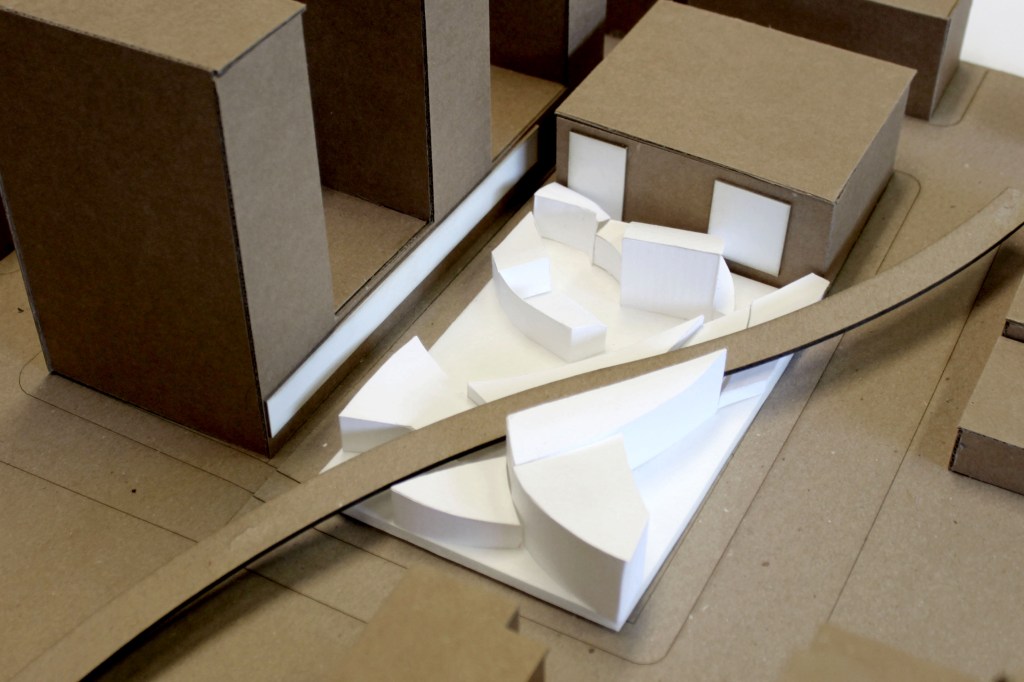
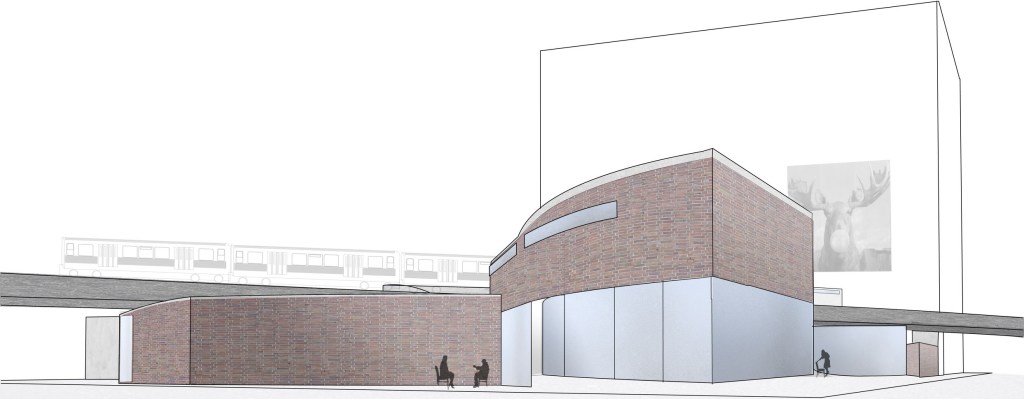
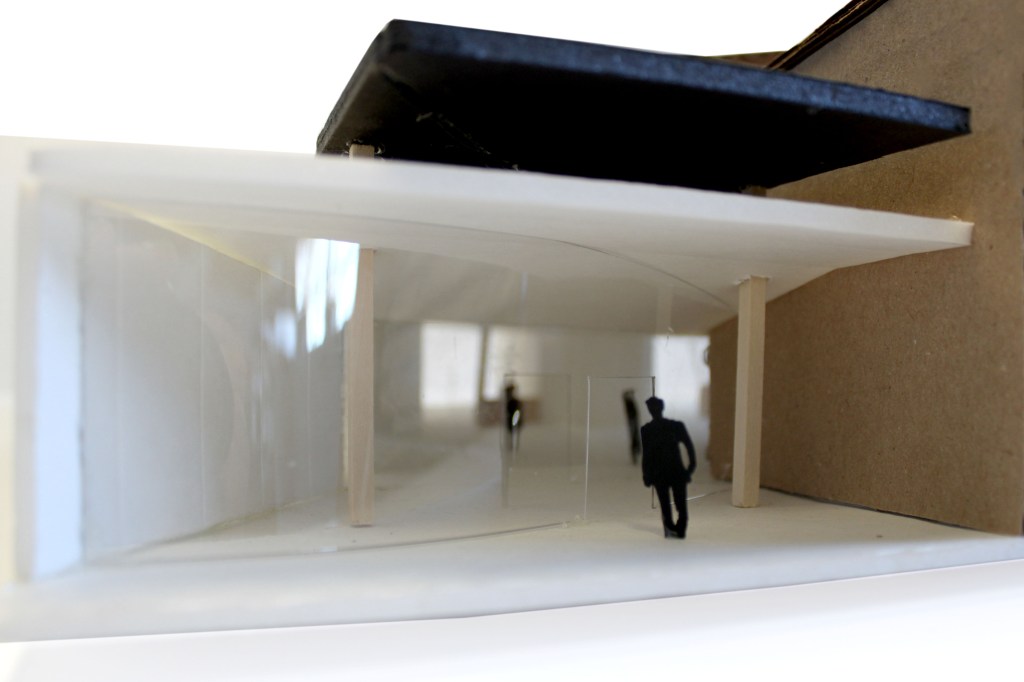
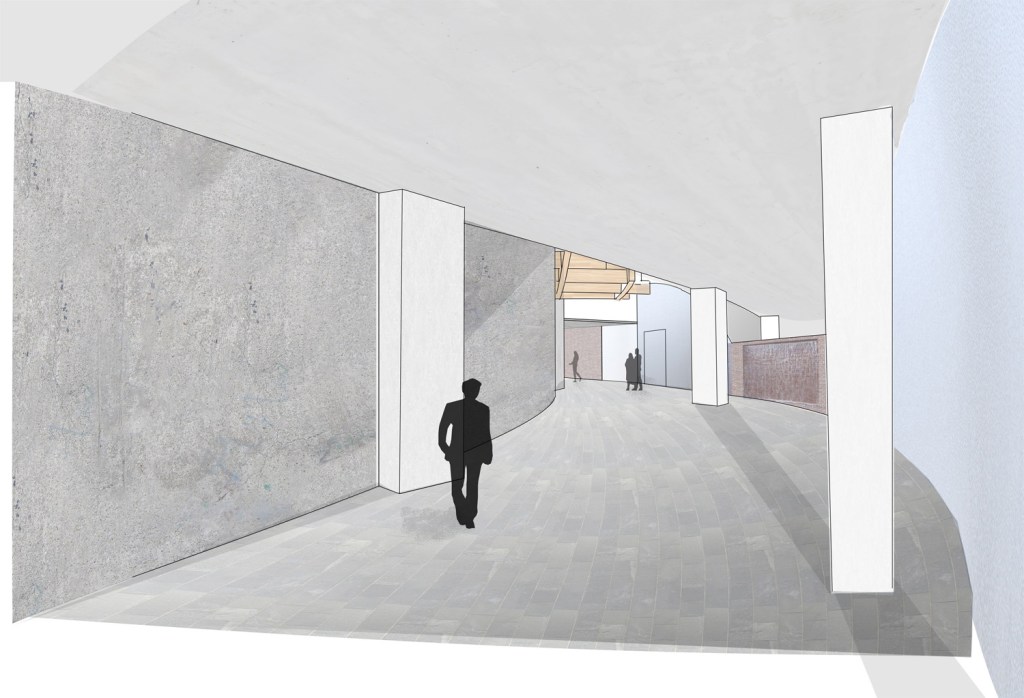
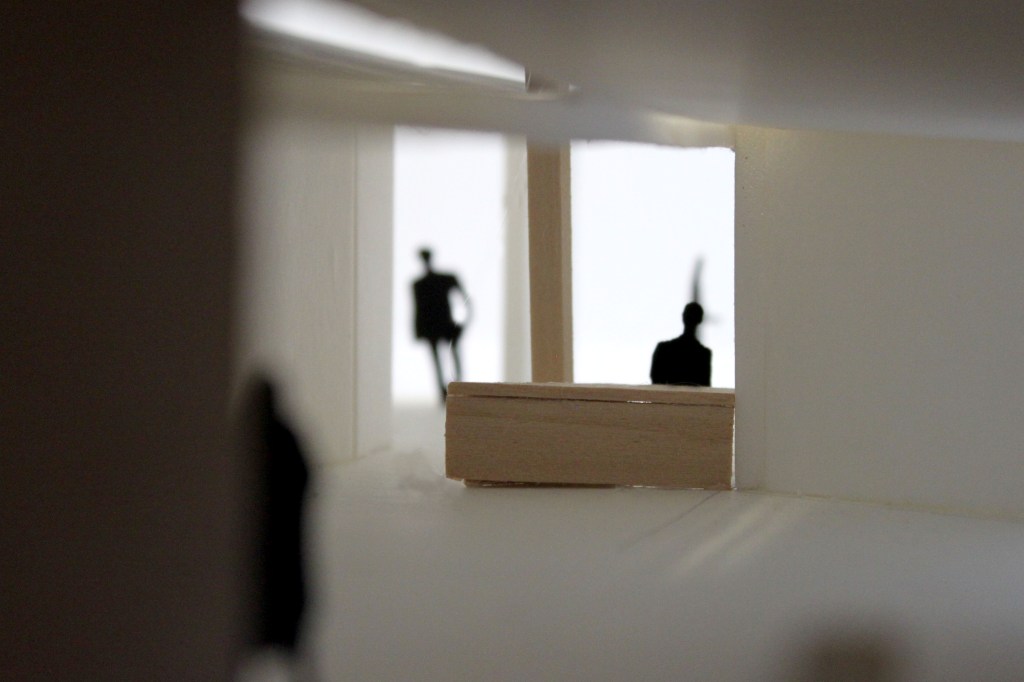
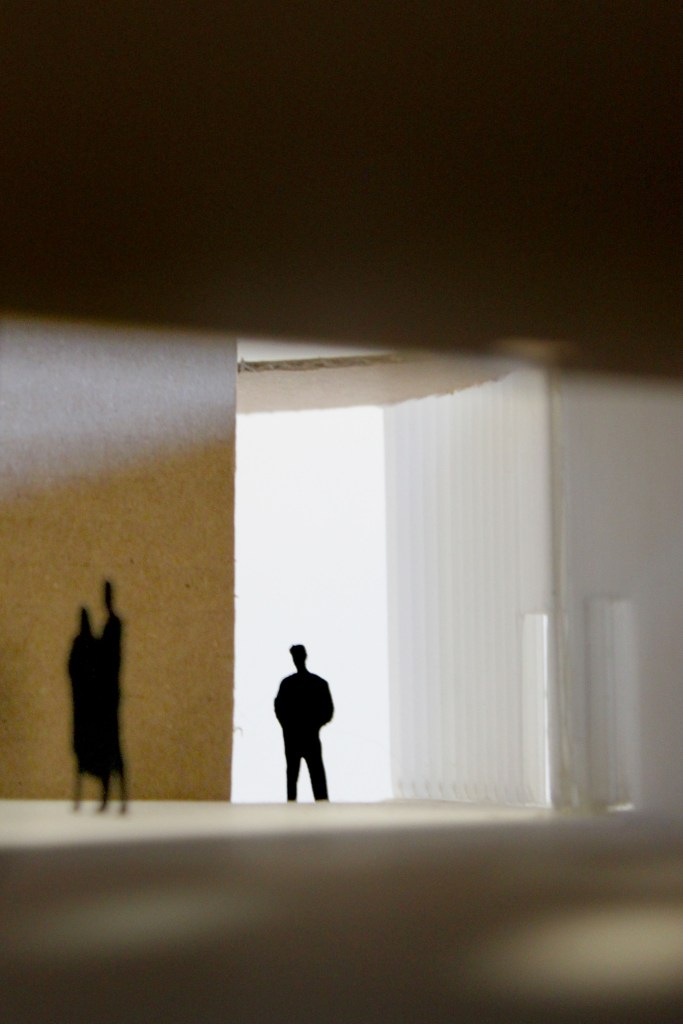
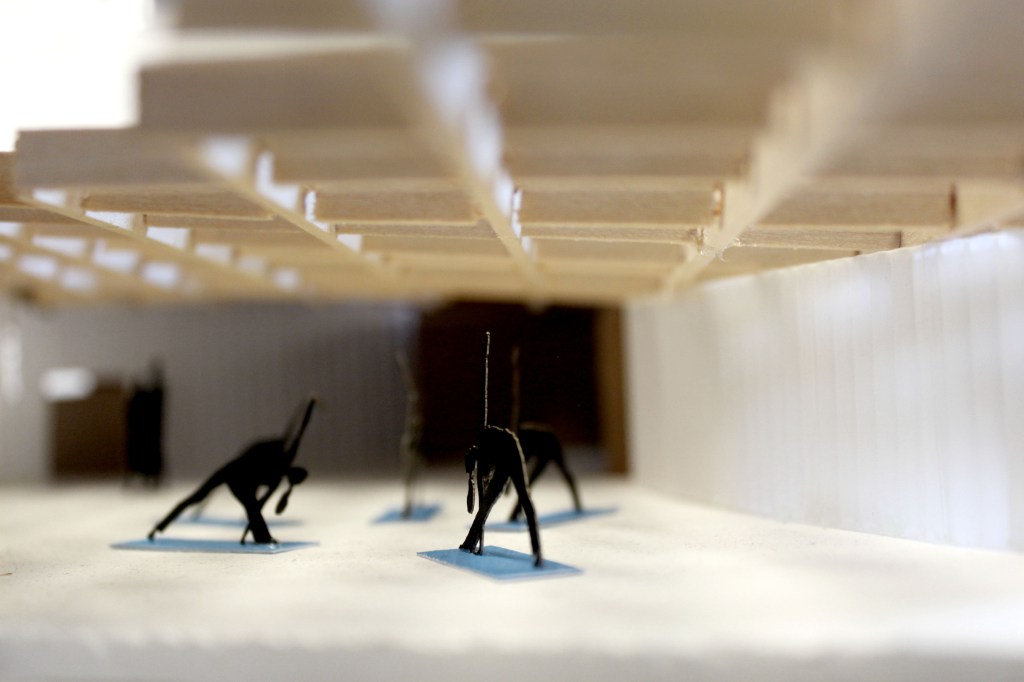
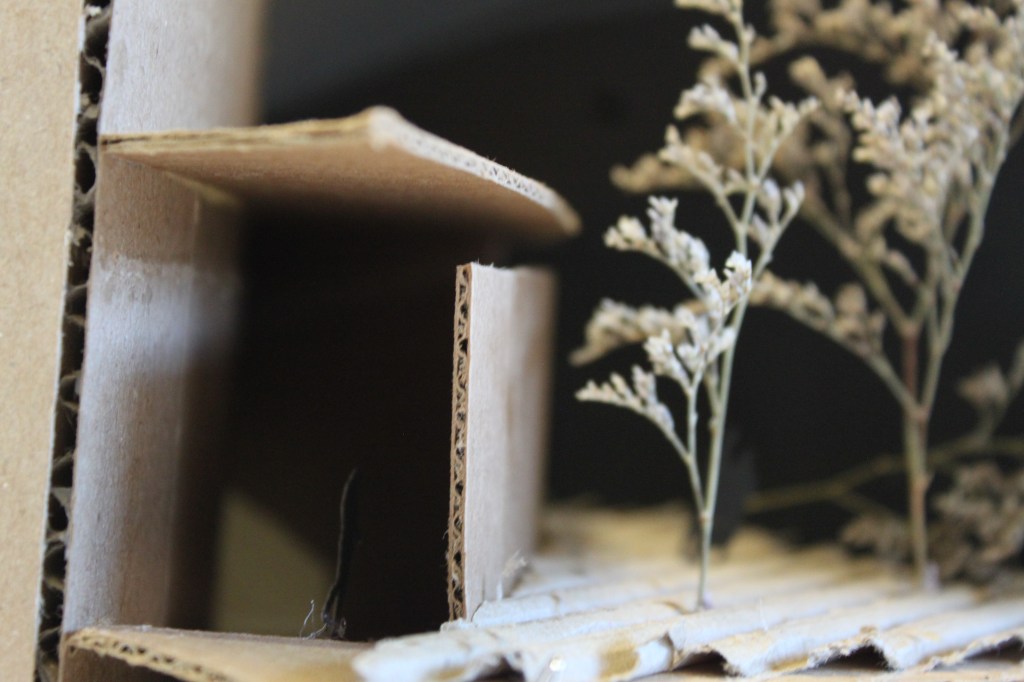
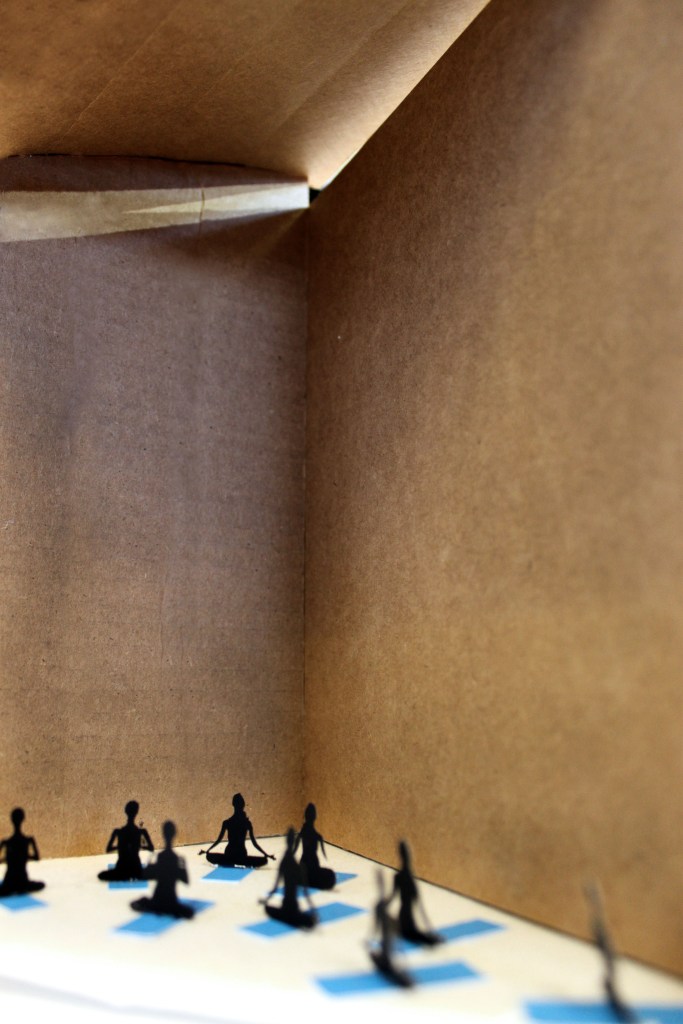
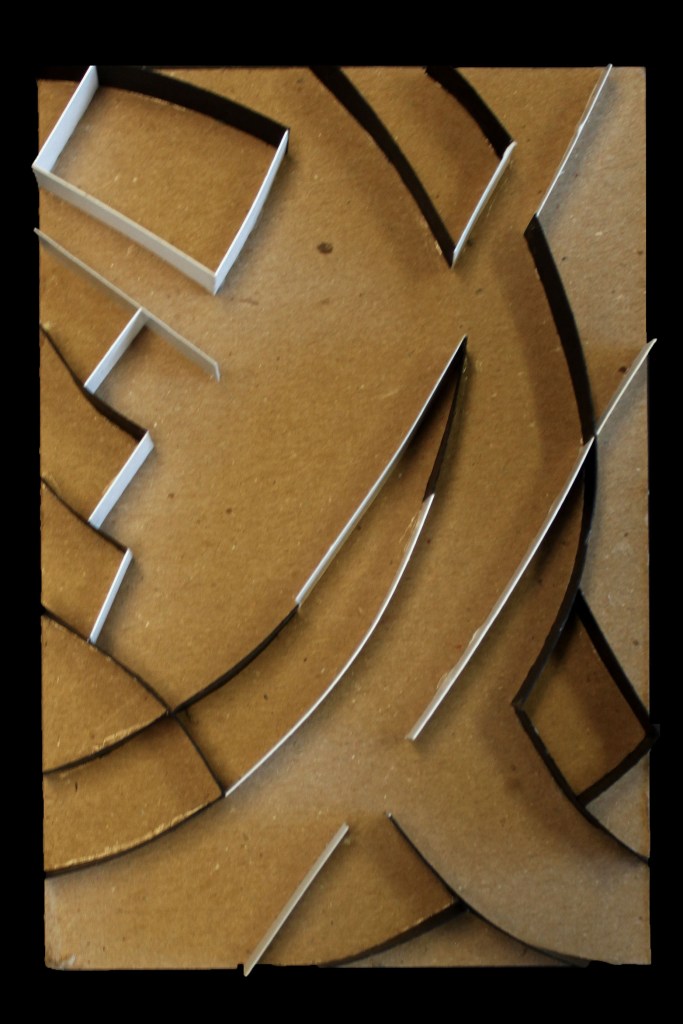
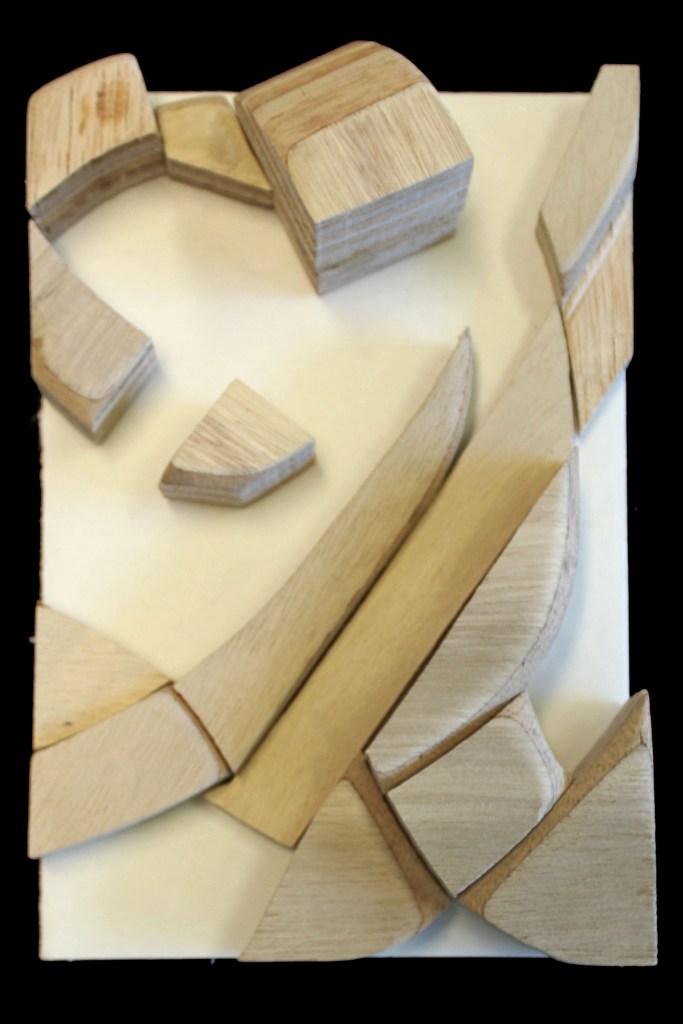
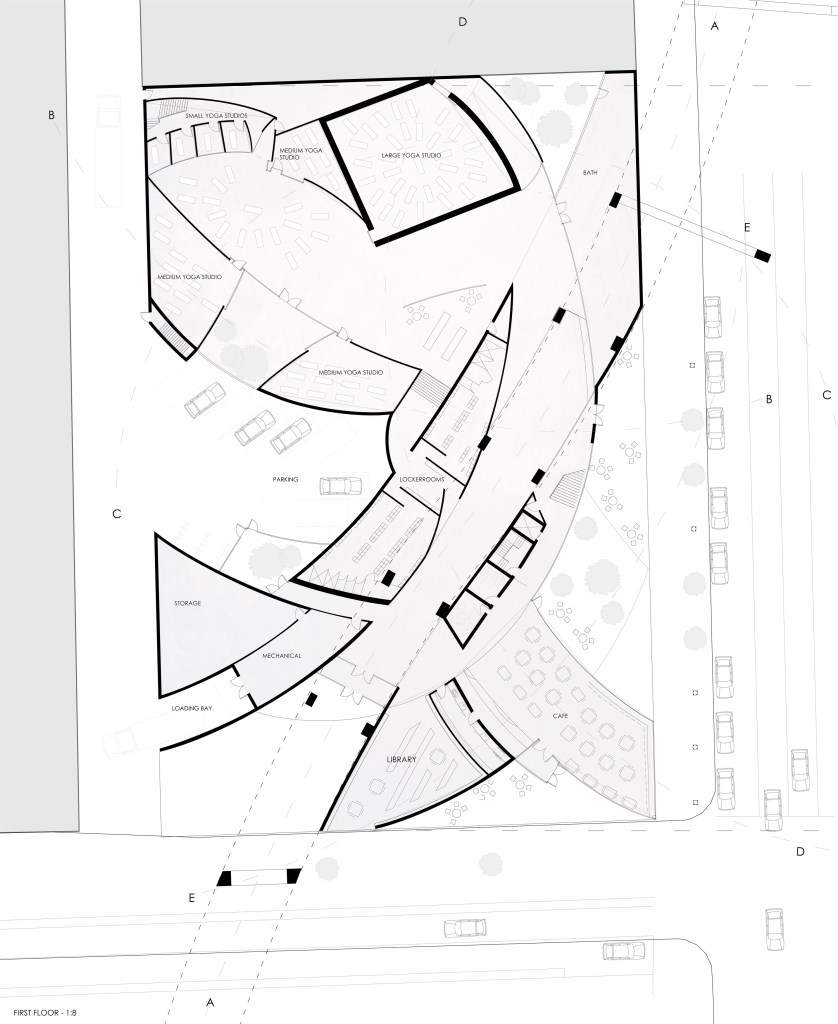
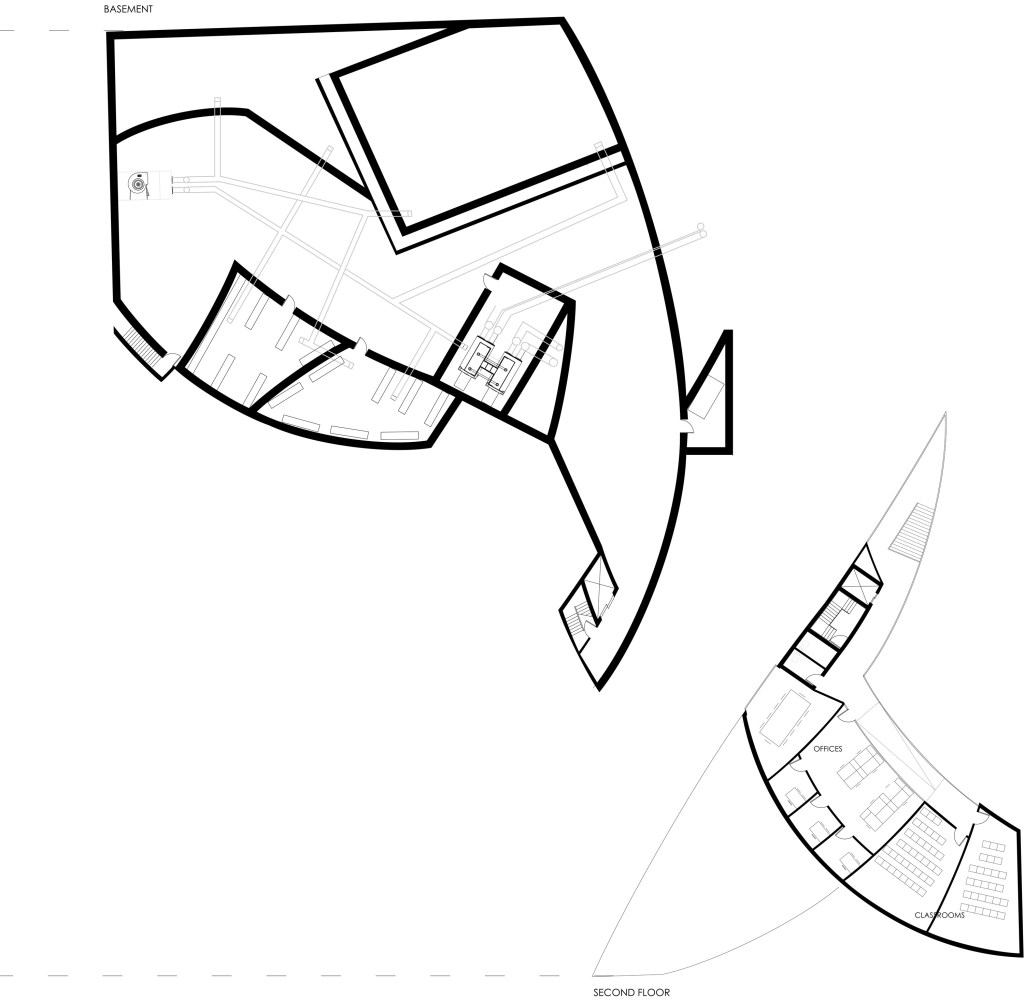
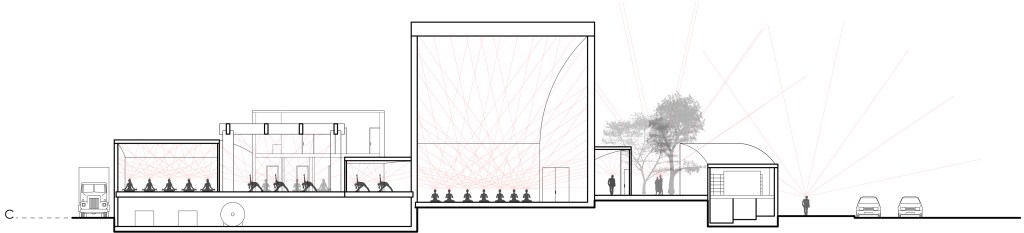
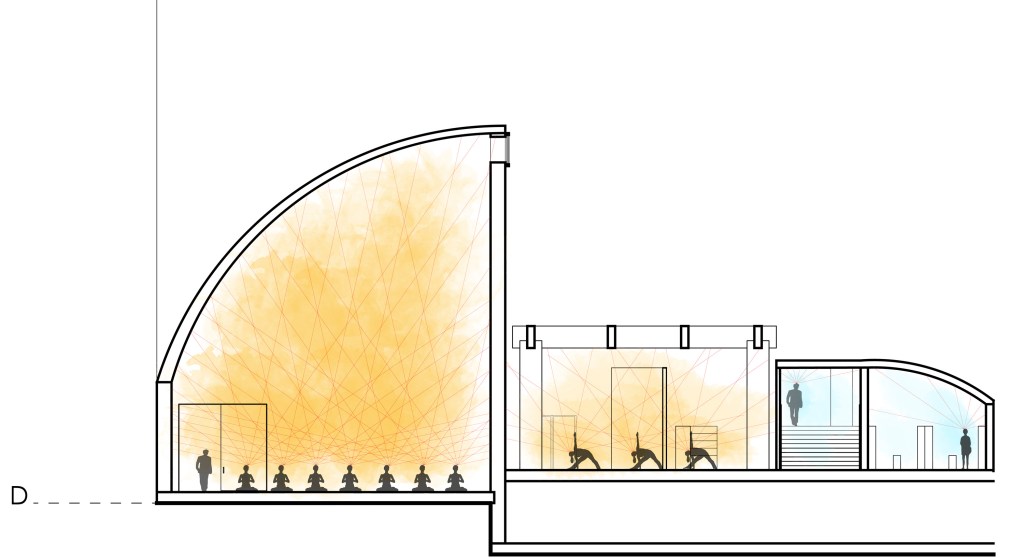
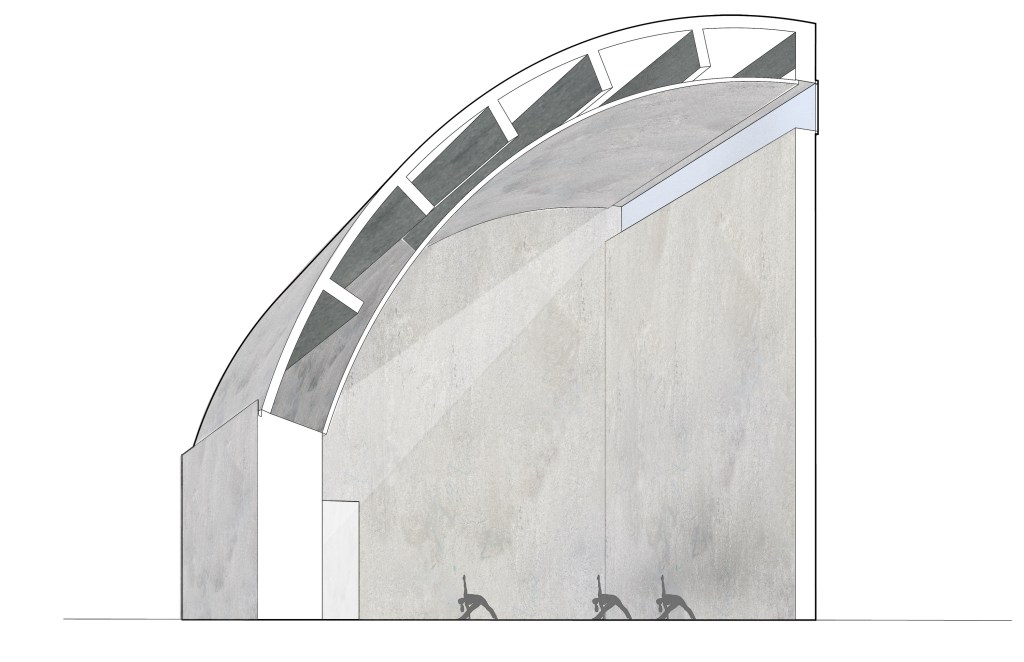
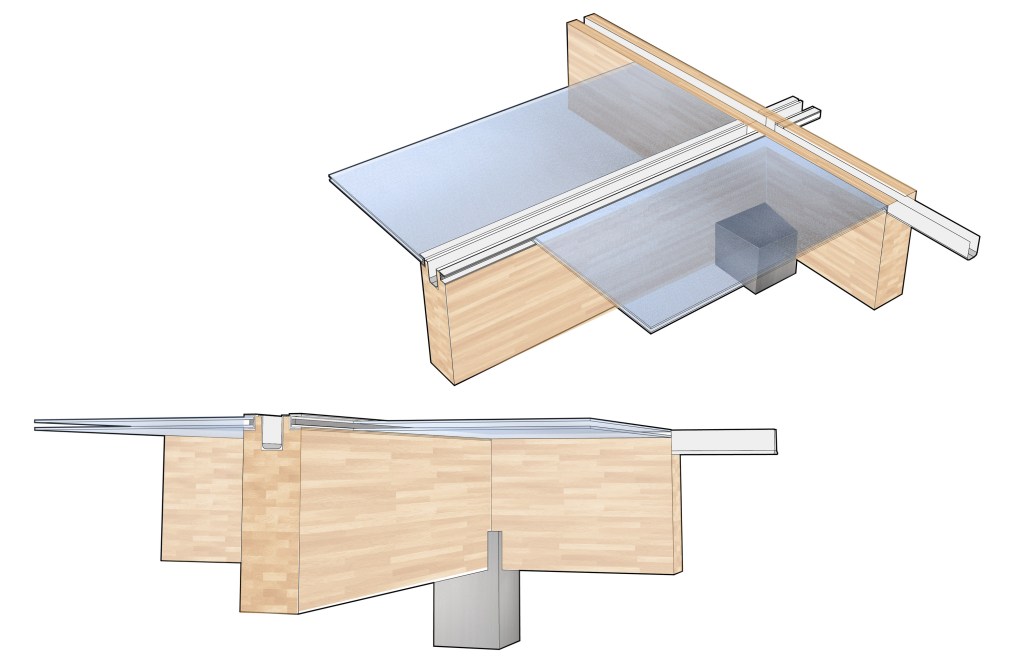
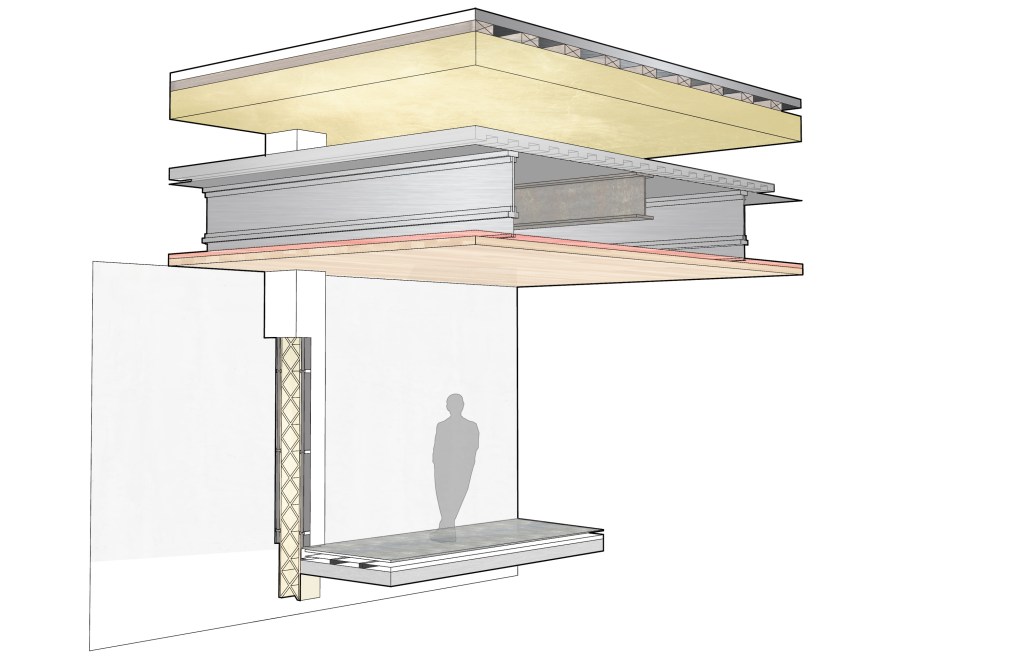
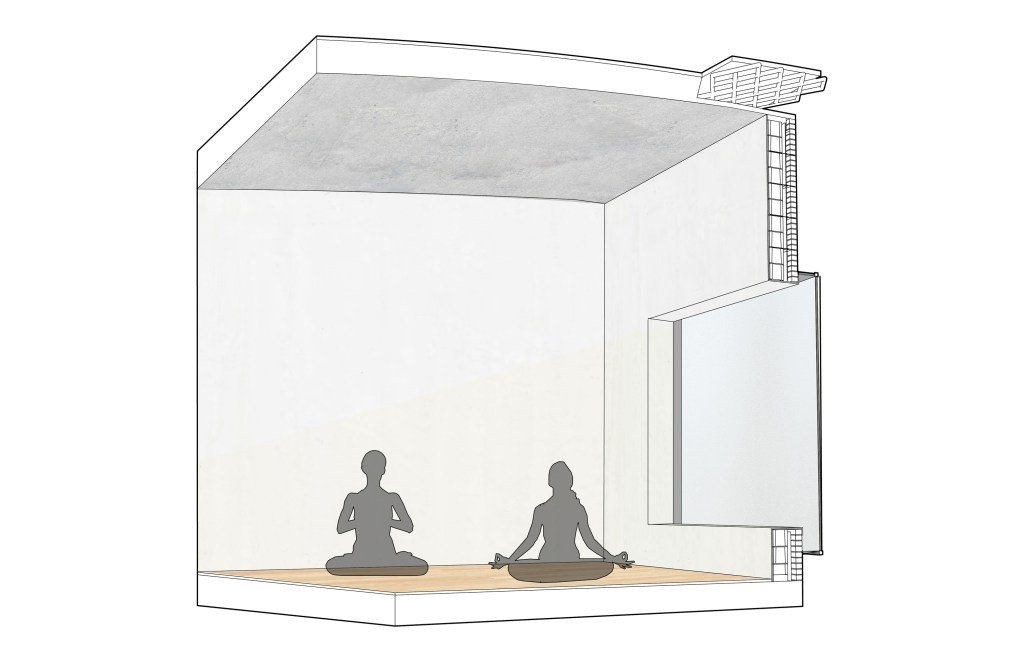
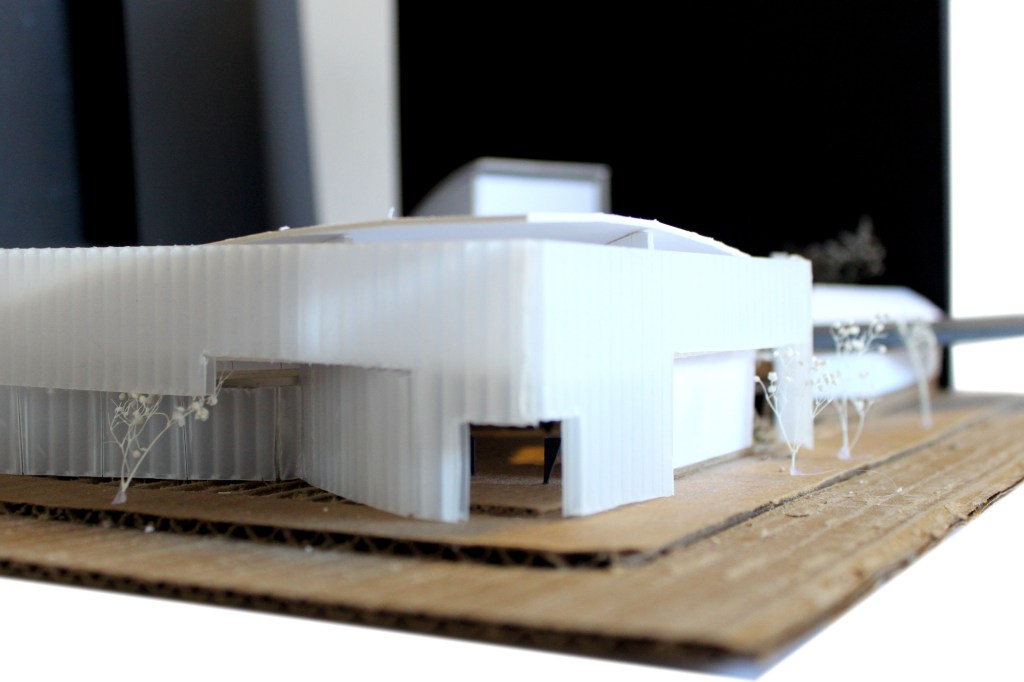
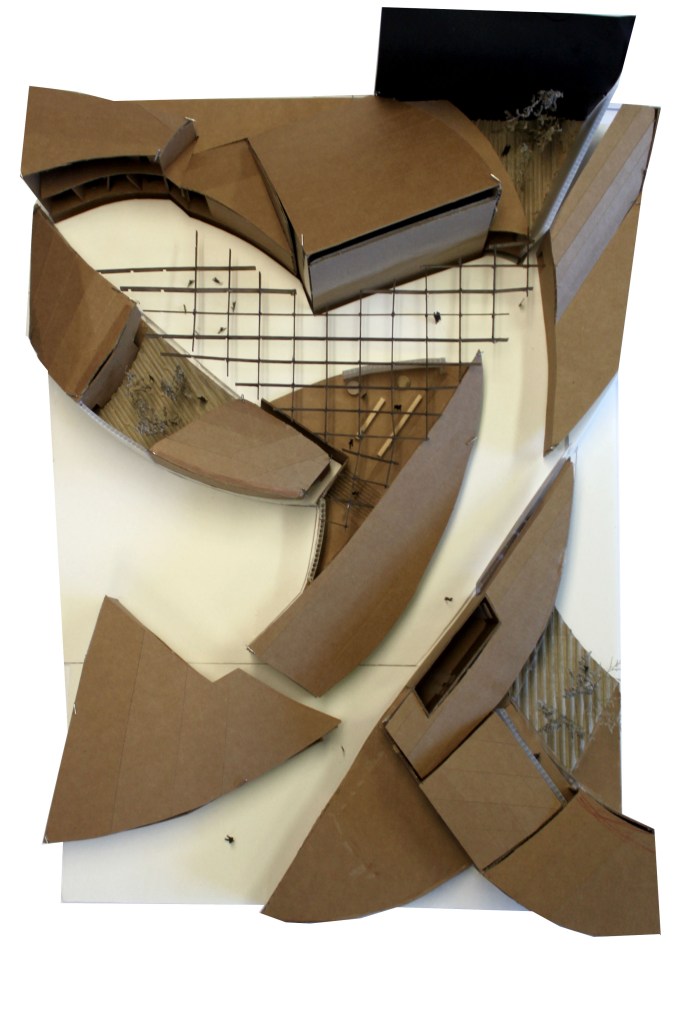
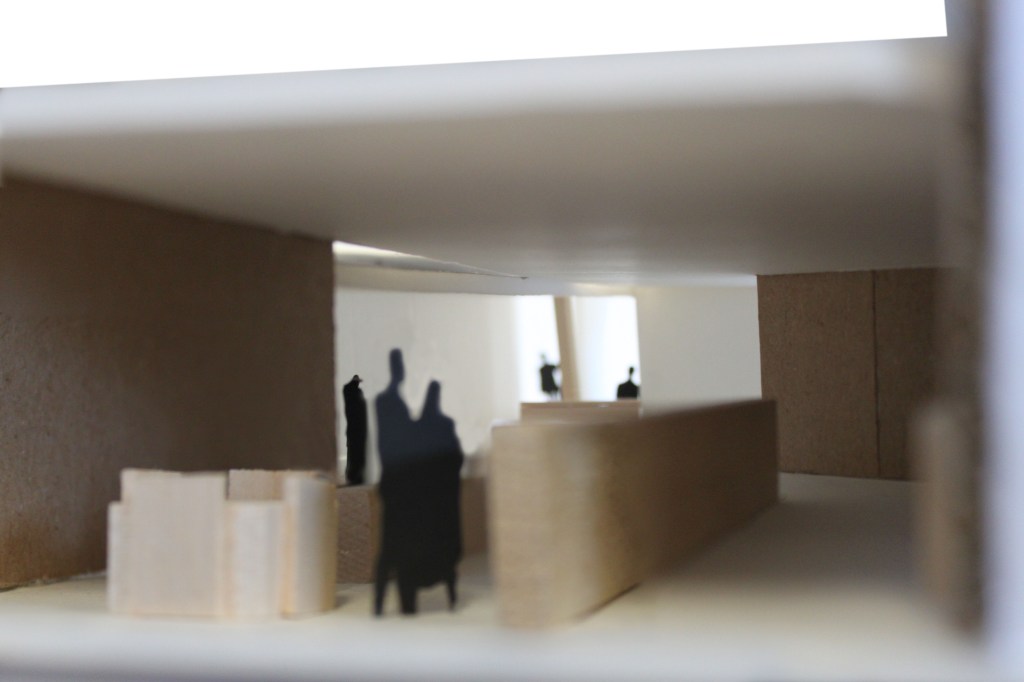
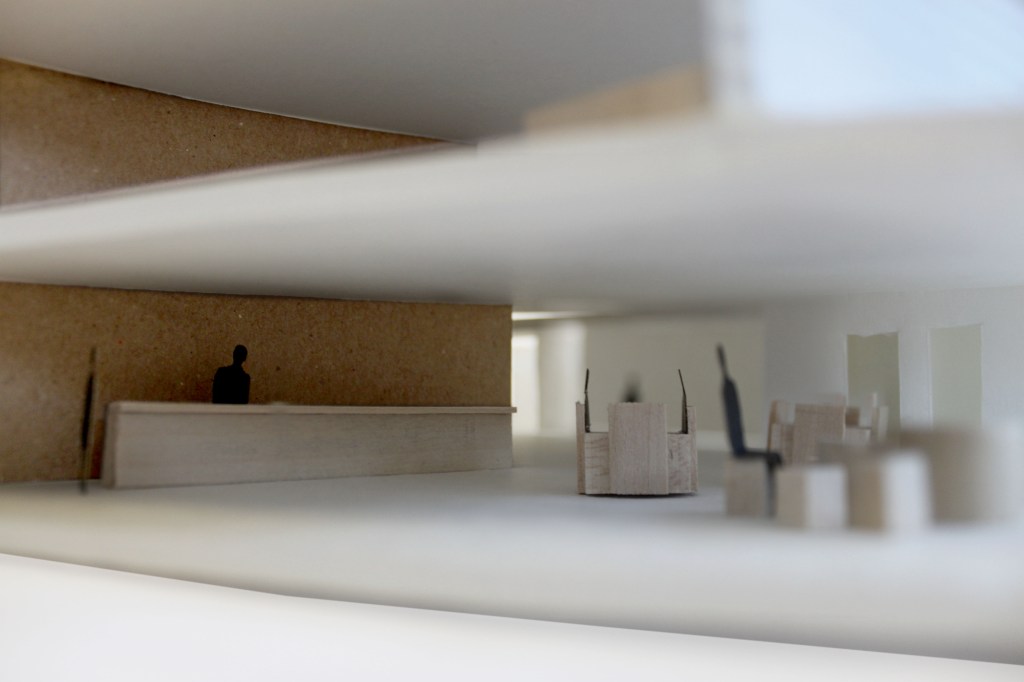
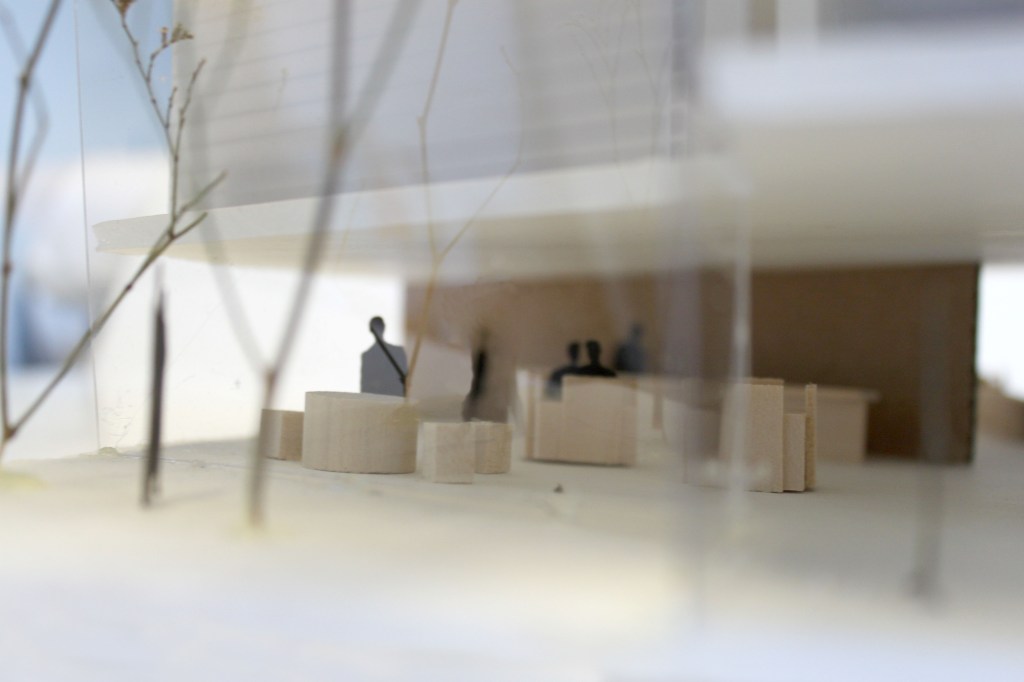
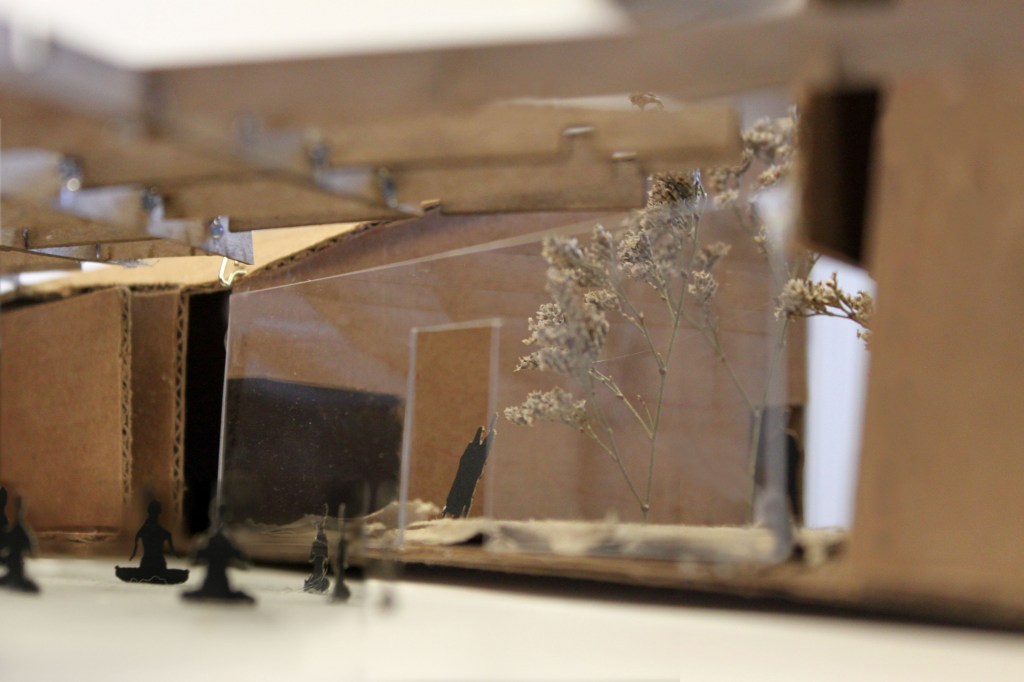
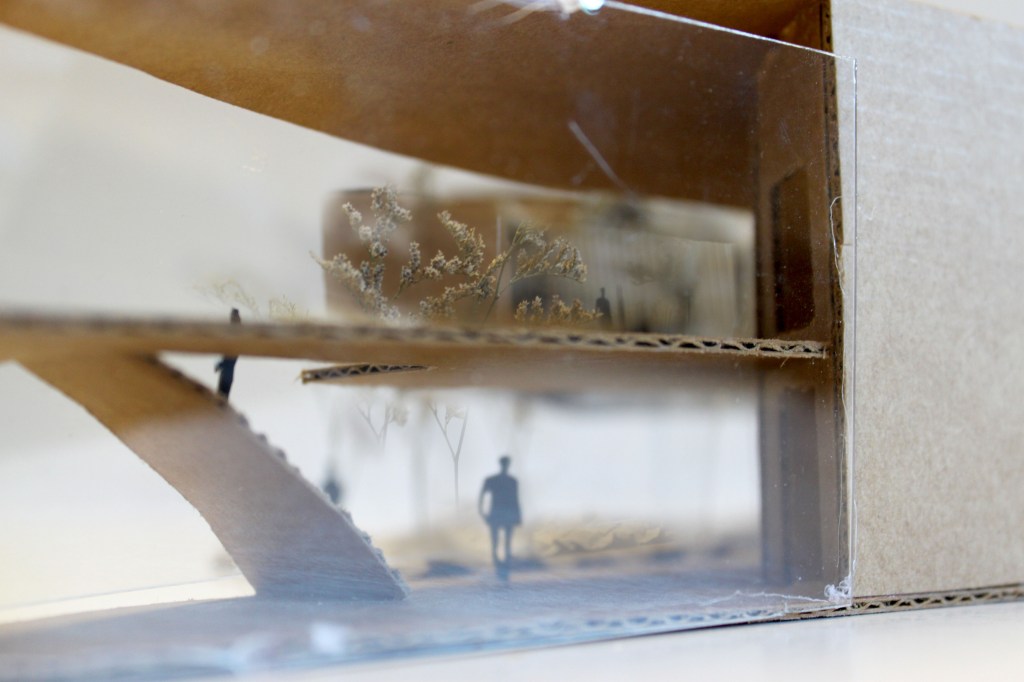
Birds eye view of the curved roofs of spacesEntry to the cafe and library from the corner of Wabash and HarrisonMain entry to the yoga studio off HarrisonWalking up the slope under the train tracks compressing the users before releasing themFront desk into the yoga centerRamp ascending into the covered studioCovered studioThe entry to the large studio as one gets a last glimpse of the park before descending the ramp to the monumental space of the studio. The large studio space Acoustic map of the site with the train cutting through above and the alley to the westDiagrammatic model illustrating where the curves originated, white as an offset from the train tracks and black growing out of the train and extending through the site as a french curveThe slops of the building which users experience as they make the journey to their studioMassing model of the indivudual parts of the building with small exterior parks on the edgesMassing model of the formFirst floor planBasement floor plan on the top and second floor plan on the bottomSection through the library, cafe, and garden on the first floor and offices on the top floorSection through a medium studio, garden, medium studio, hall to the covered studio, lockers, journey under the train, and cafe on the first floor and classroom on the second floorSection through a medium studio, covered studio, medium studio, large studio, garden, and poolSection through the large studio, covered studio, and locker roomSection through the train tracks, circulation from the cafe to the class rooms, and cafe on the first level and offices and classrooms on the second levelStructure of the large concrete studioConstruction detail of the covered studio made of glulam with channels to move rainwater from the roof and into a rain collection container in the basementConstruction of the roof under the train tracks with layers of insulation to reduce noiseConstruction detail of the medium brick clad studios earlier iteration of the main entry from Wabash and Harrison into the cafeSite plan LibraryCafeCafe looking towards the garden on Wabash AveFrom the garden of Wabash Ave looking into the cafeFrom the covered studio looking towards the medium studios and gardenCirculation over looking the garden
“The architecture of our time is becoming an increasingly visual one presented exhaustively through the fixed lens of the camera as we are constantly bombarded with images via the likes of Instagram and ArchDaily. The digital connectedness is very likely leading to our disconnection from true experience which can only be had through the engagement of all of our senses. Only by seeing, smelling, touching and hearing space can we measure it against ourselves and connect ourselves to it physically and intellectually”
Seeking to understand Phenomenology and our connectedness to our environments through all of our senses, we took on an acoustically busy site under train tracks in Chicago. Envisioning a peaceful space within the acoustic density of a city, we designed a yoga center made of multiple studios coming together with public programs of a cafe, library, and classrooms. Creating a gradient of acoustic qualities along one’s journey deeper into the building. The curved roofs took form after a sectional analysis of acoustic qualities of various forms, resulting in a full background buzz. Taking inspiration from the curves of the train tracks, the building grew from under the tracks rising up around the tracks. Each space took on its own unique form with a specific acoustic quality
“Our experience of space is as connected to its acoustics as its appearance; it’s inextricable. To walk into a church without your ears is like walking into a bakery without your nose. To not discern individual sounds is to remove that phenomena from our palette and to do so will dilute and dull our experience. The concern is that our city is losing its echo. By letting research become our design tool, we can embark on a fine tuning of space and experience through architecture and design. These strategies can be applied to solve for individual architectural agenda, and together can allow us to reconnect with the spaces and environments we inhabit.”








 Natalie Haydon-Hawkins