
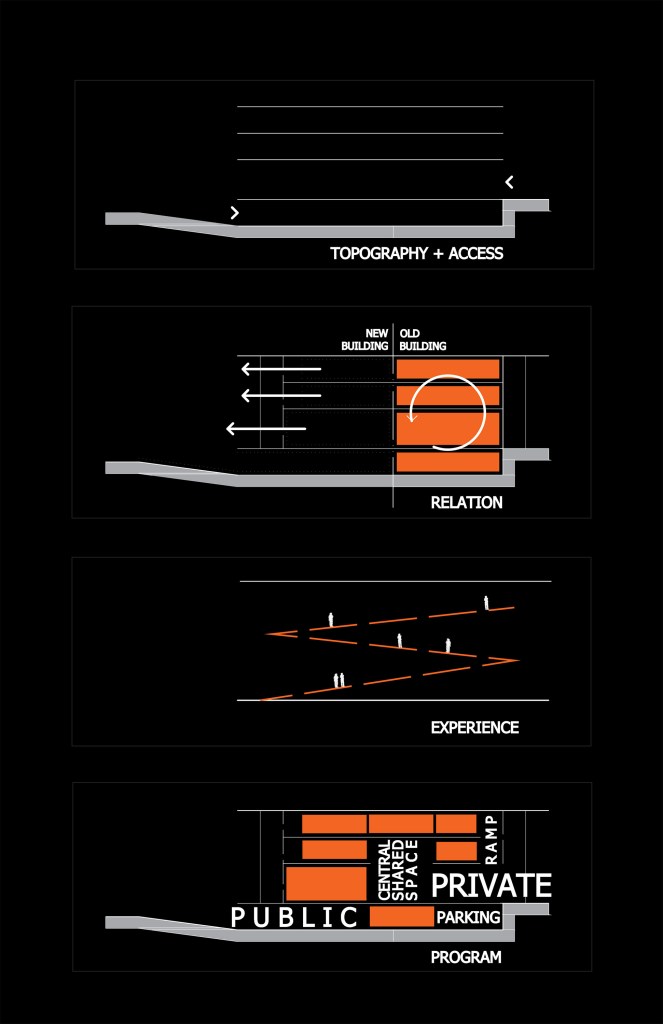
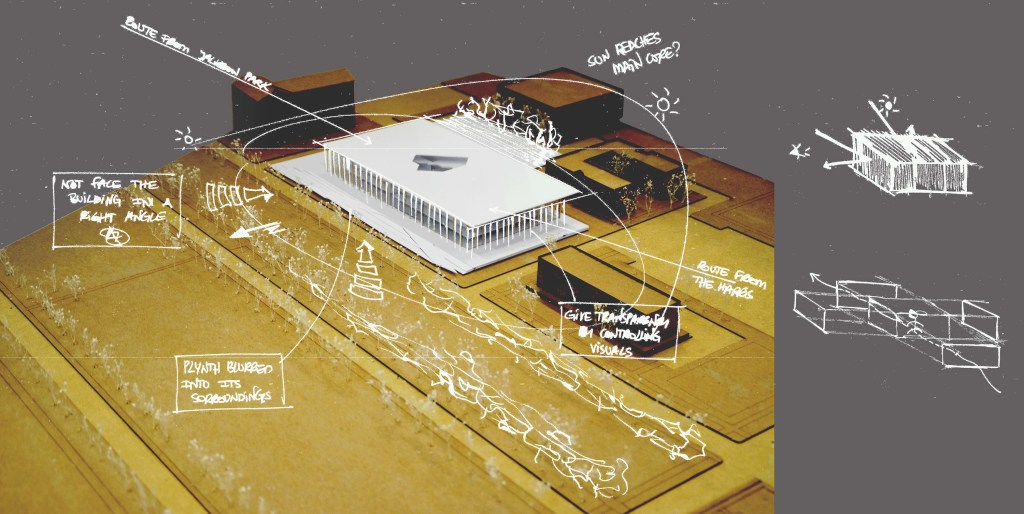

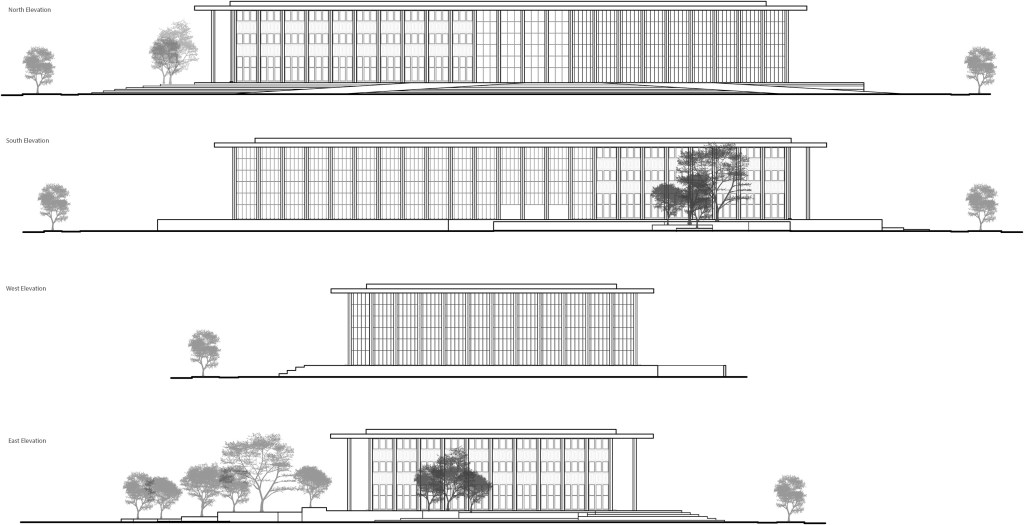
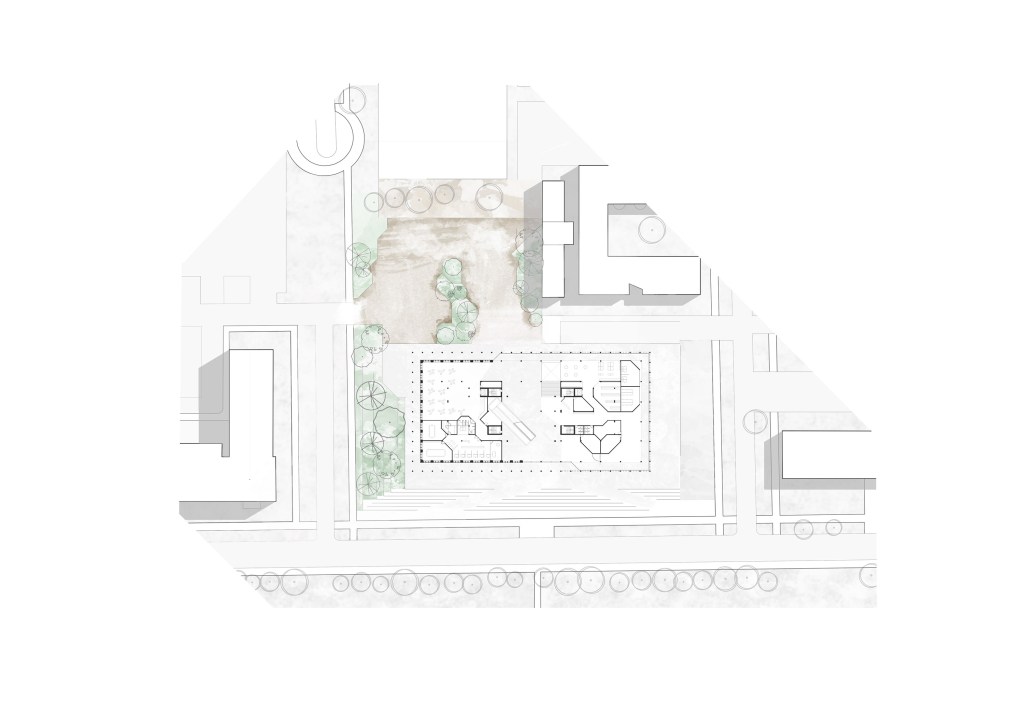
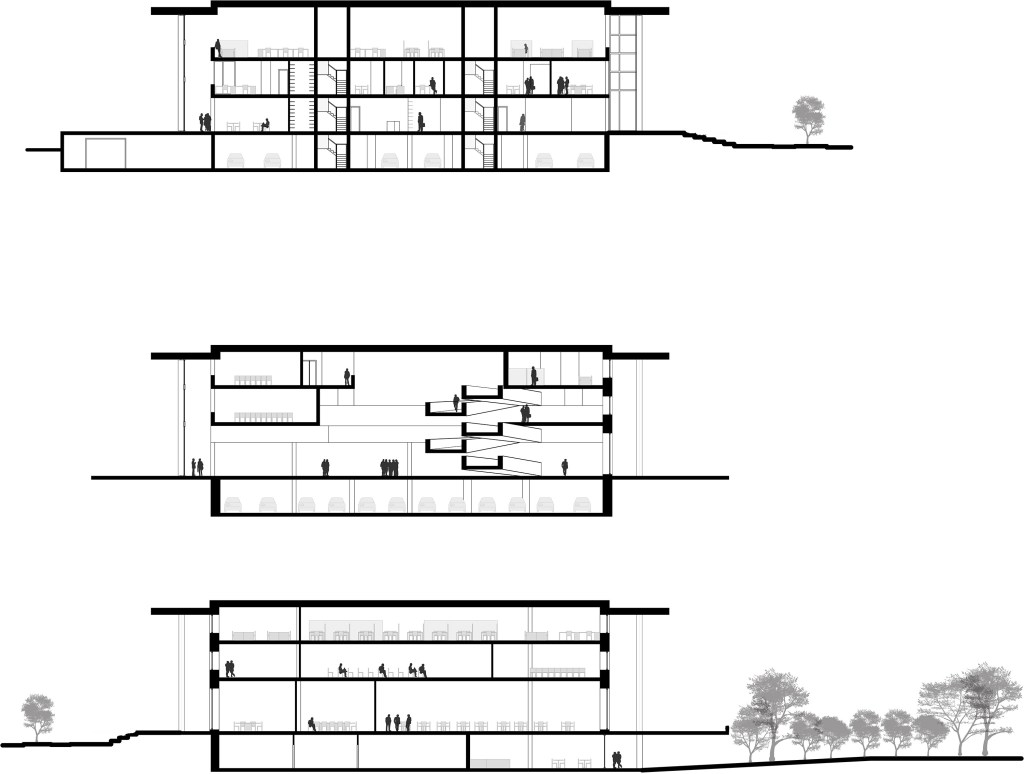
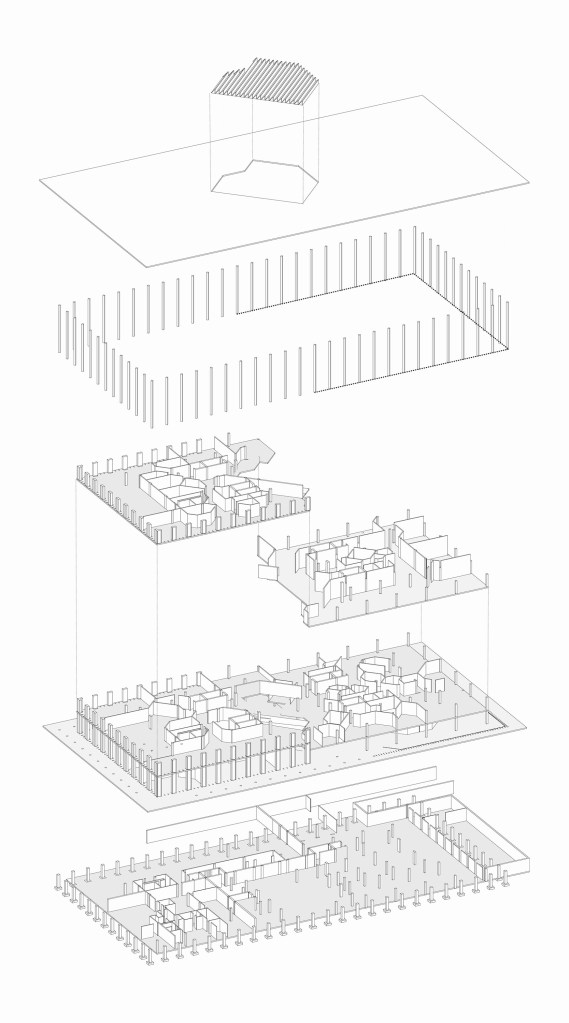
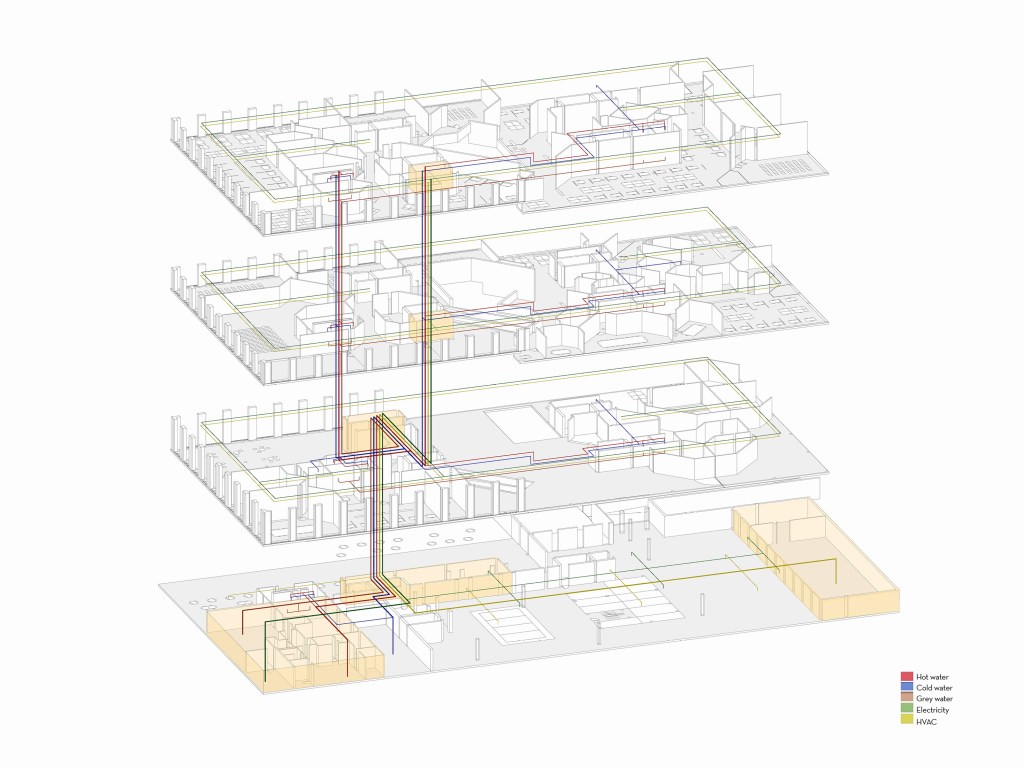
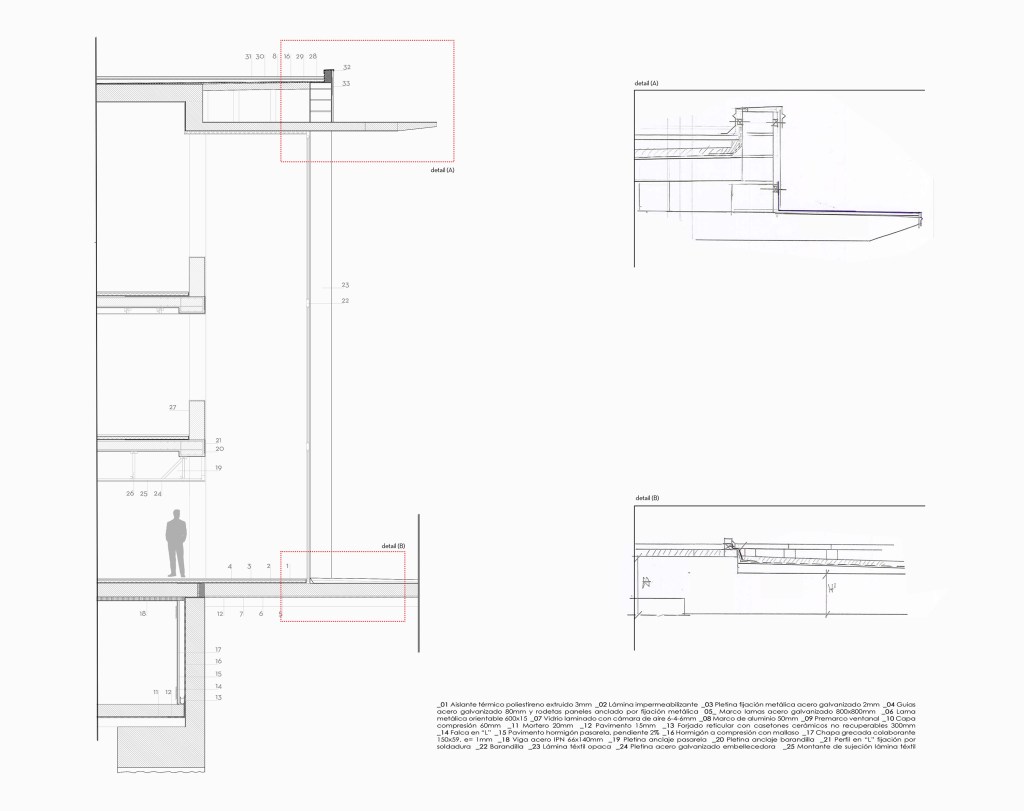
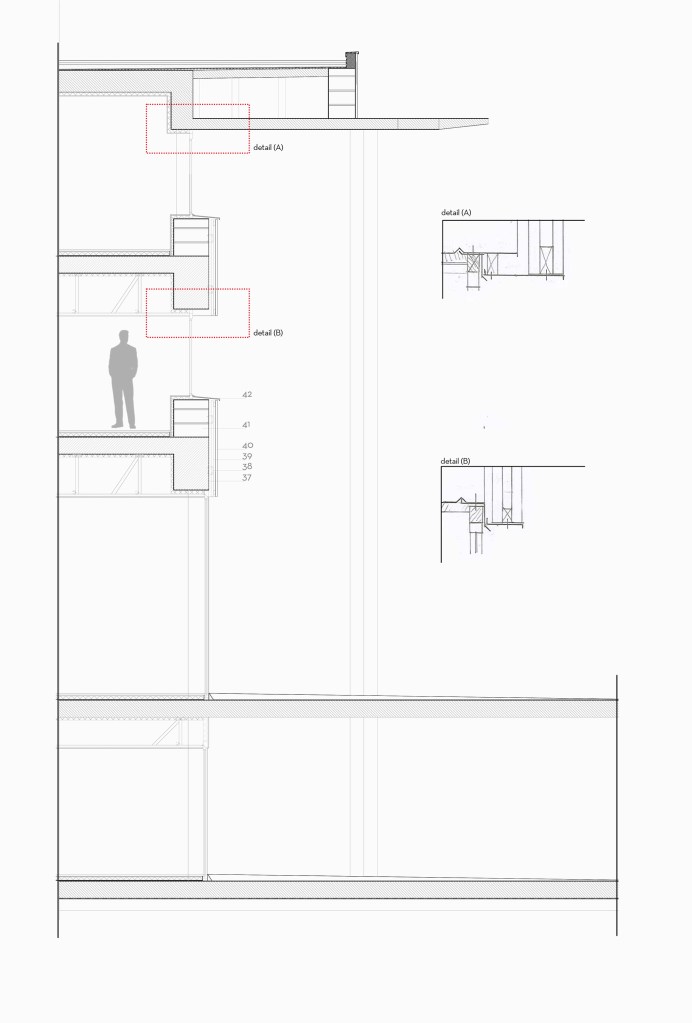
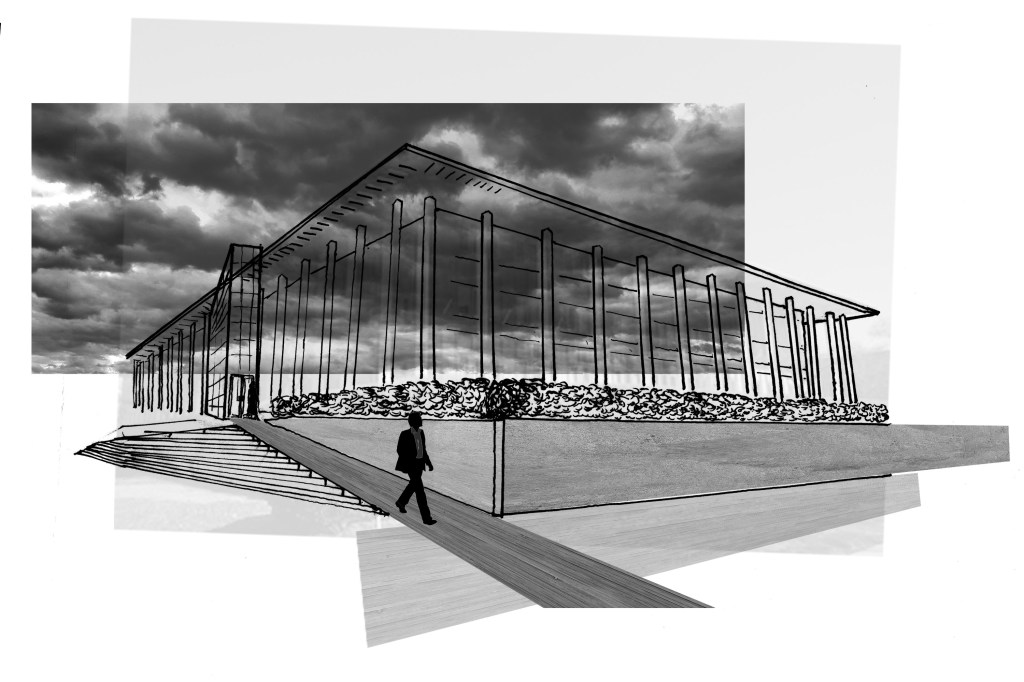
The existing Edward Durrell Stone building was located on the University of Chicago campus on the south side of the central midway isolated from the active part of the campus. The building in its current state is static as it rests upon a plinth with a single staircase leading to the front door. Seeking to break down the imposing existing building while referencing the historic architecture, we thought of the building as an extension of the midway. Melting away the rigidity of the plinth and creating an entrance which allowed people from all sides to enter up a ramp or gently terraced stairs to begin to make the building more inviting.
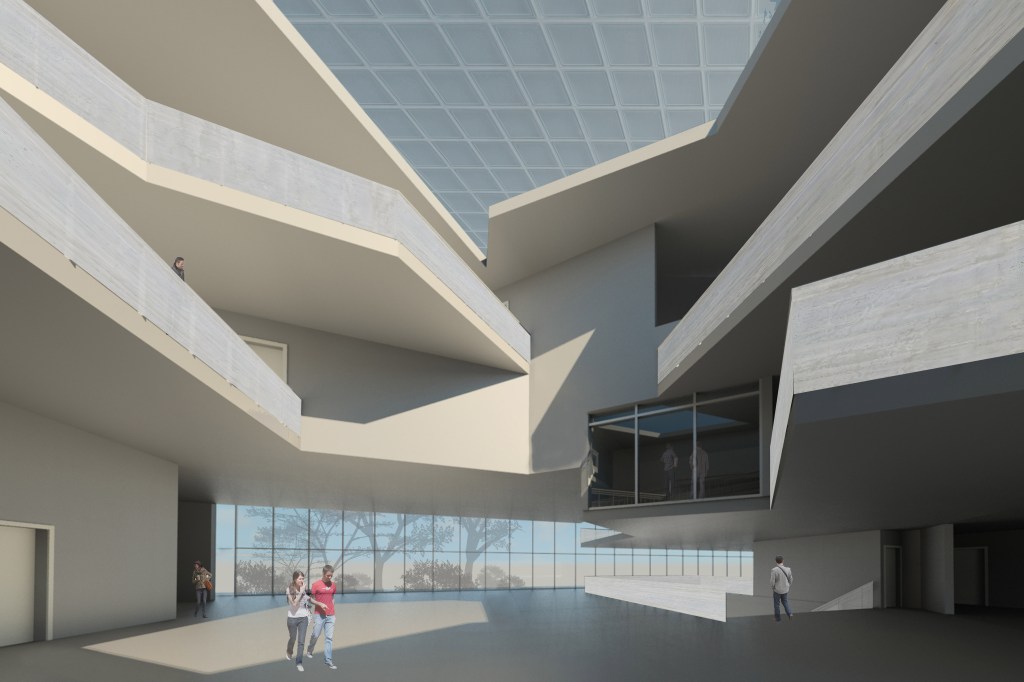
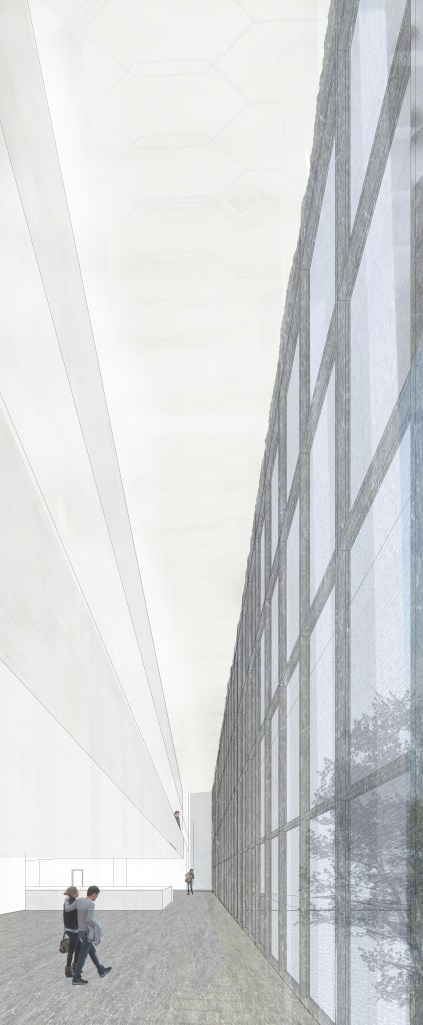
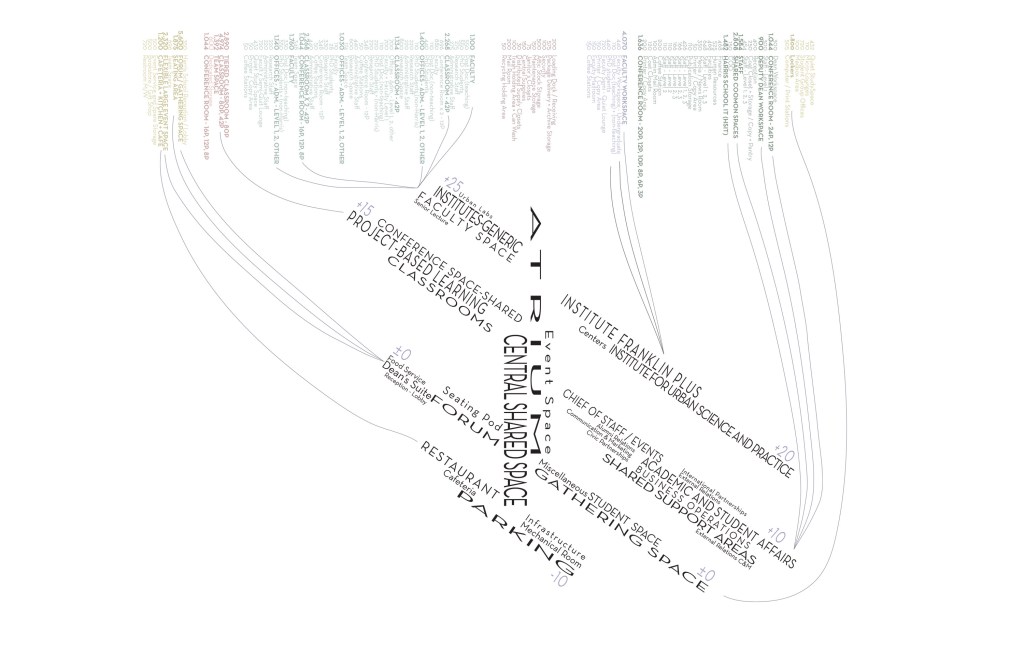
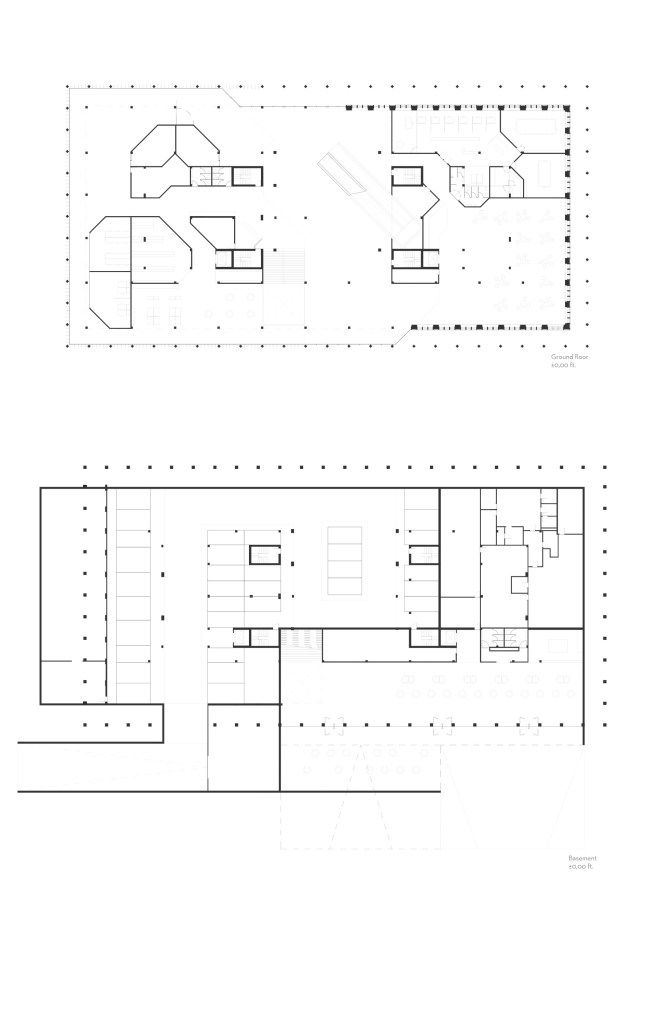
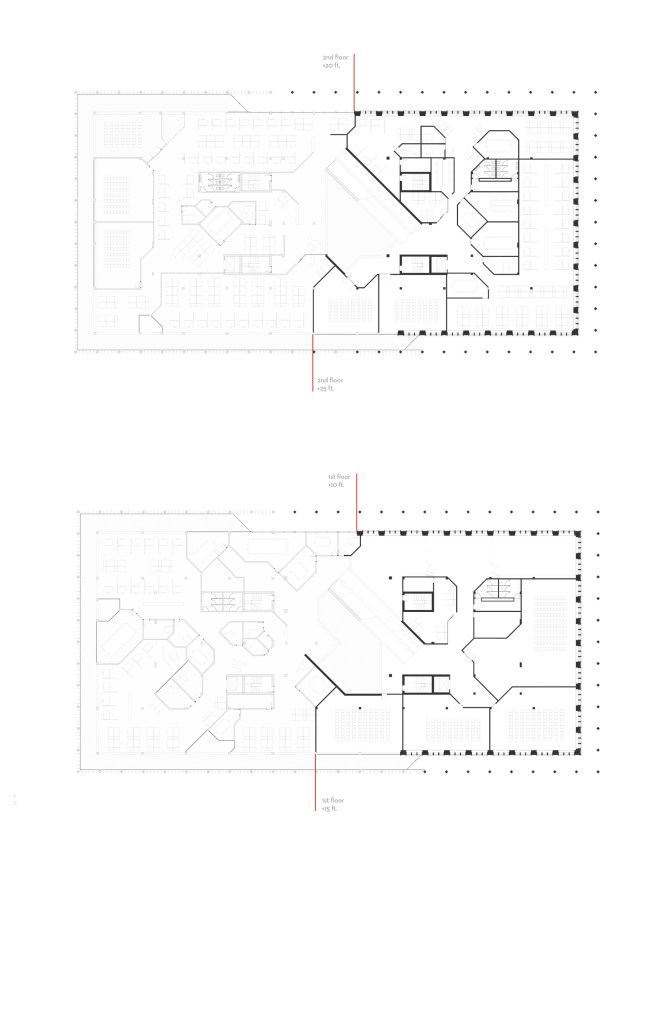
The original large floor plates created dark isolated interiors which we strove to open to the exterior and create an experience when moving through the building. Thinking of the first floor as a street through the building, an atrium emerged centralizing the circulation in an interior ramp up through the building and bringing people through the first floor to the garden in the back where a ramp brought them to the backyard and raped them down to the sunlit cafeteria below.
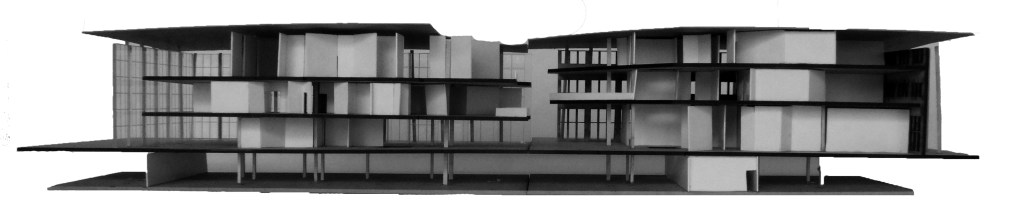
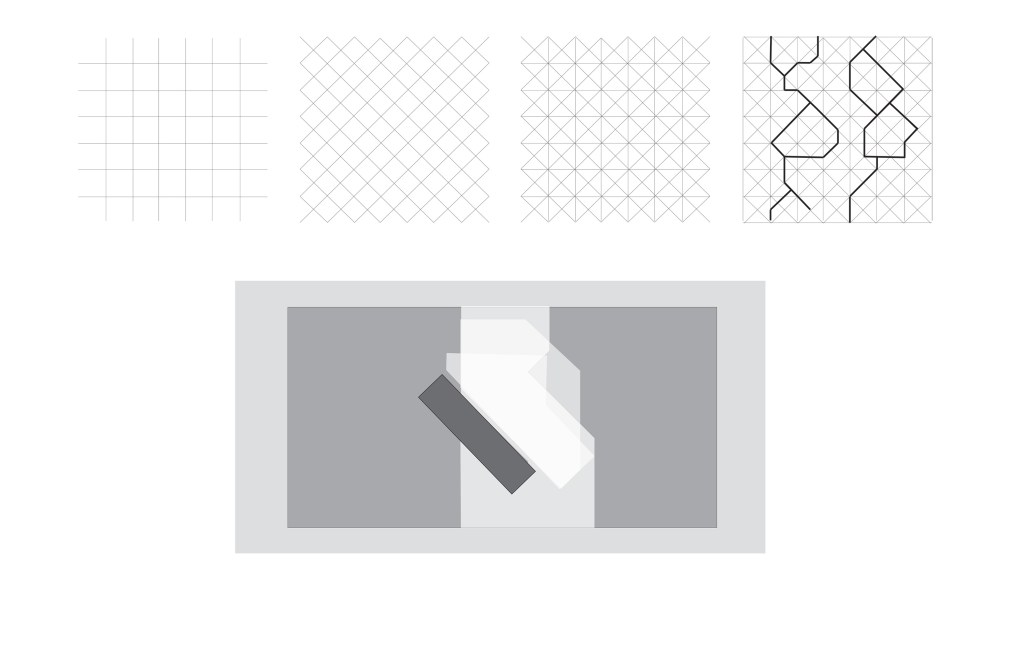
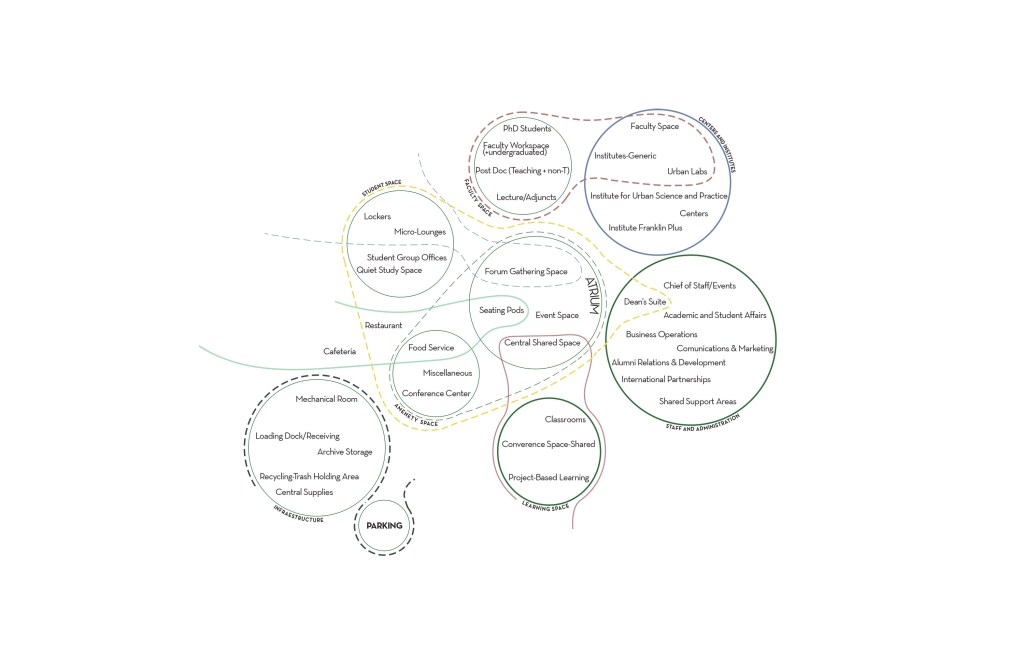
With the specification of the program the university had planned and the way we had decided to place the programs, the concept of cell into cell emerged. We took inspiration from the building’s current hieroglyphs on the façade and created these geometries along this grid which began as smaller cells closer to the building’s center morphed into large cells on the exterior to best use the natural light. The learning spaces, administrative offices, and the institutes each become their own cell and then are divided up into smaller cells within these floor plates.
 Natalie Haydon-Hawkins