

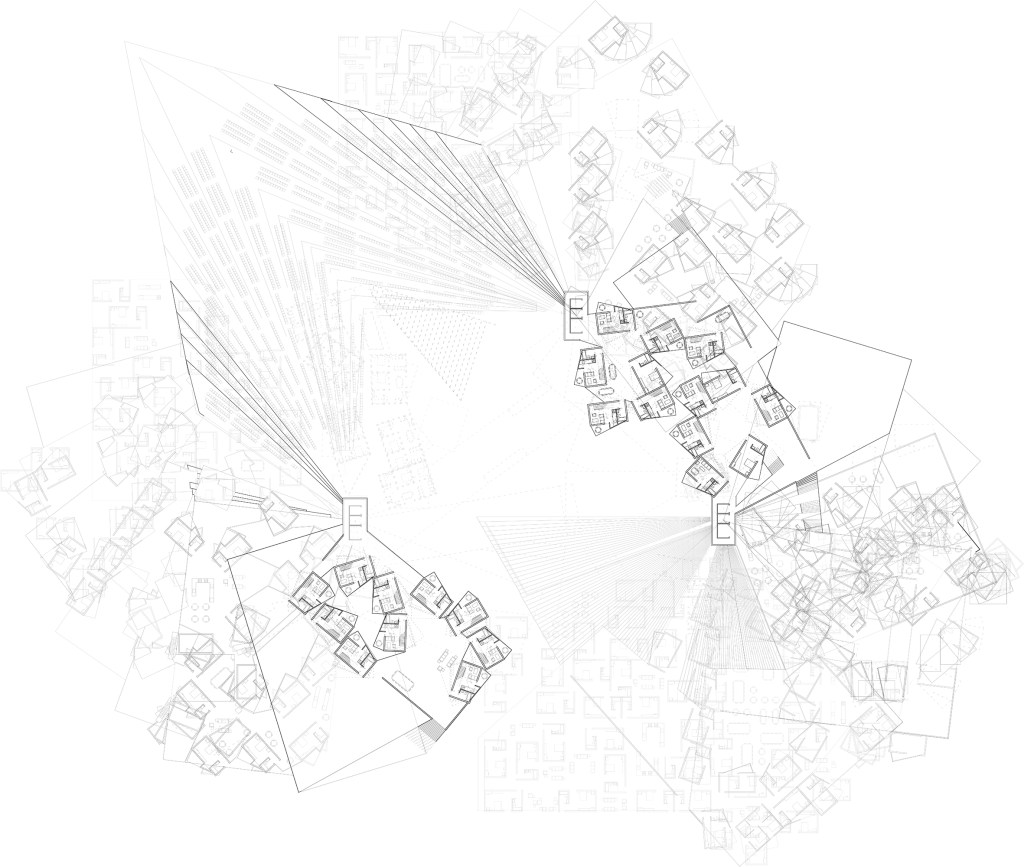
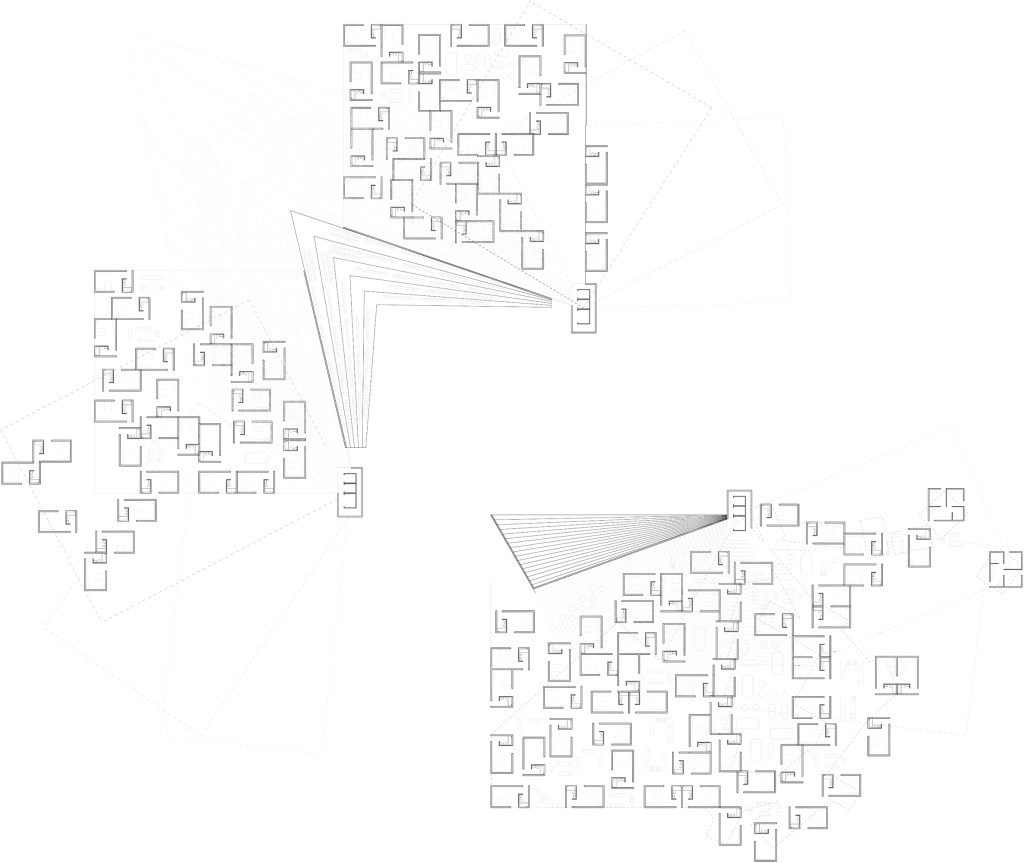
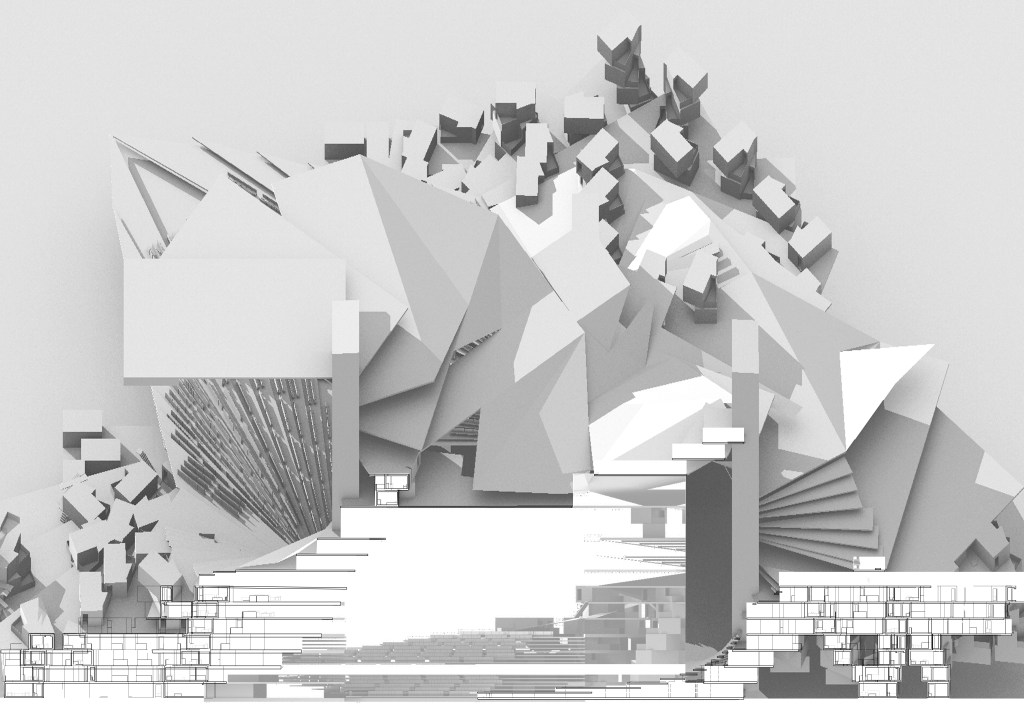


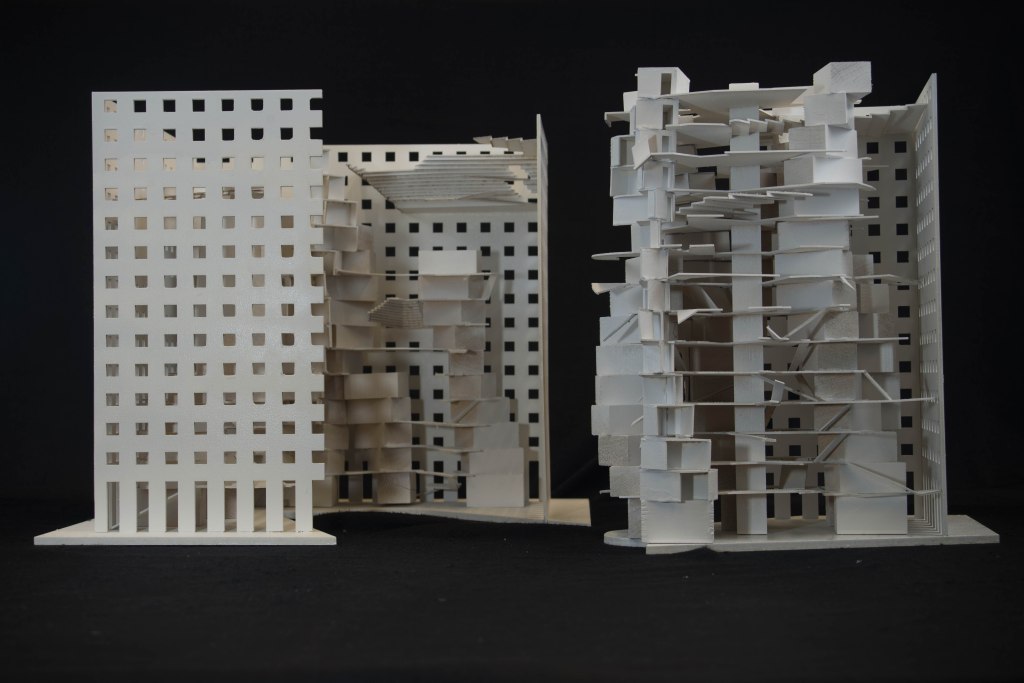


The mobility of the nomad has rapidly increased in the modern era and cities are struggling with increasing difficulty to keep up.The nomadic lifestyle is inherently isolating and Panama is currently unable to cater to the needs of the modern nomad. Our nomad profiles which include tourist, retirees, and locals, experience various levels of temporarily from days to months to years which require a variety of spacial conditions on a gradient of permeability, from closed and private to open and dense with activity.
Panama’s lush forests give way to the canal slicing through the center of the nation, providing a visual representation of Panama’s colonial past and the beginning of globalization. There remains distinct separations between the towering skyscrapers and the local housing which is used as infill in the urban landscape. A clash of cultures becomes visible in this setting as the globalization which allowed the tourists and retirees tower above the locals below. The Revolving City seeks to not only understand these distinctions and the ties to Panama’s history but also begin to unite them within a single city.
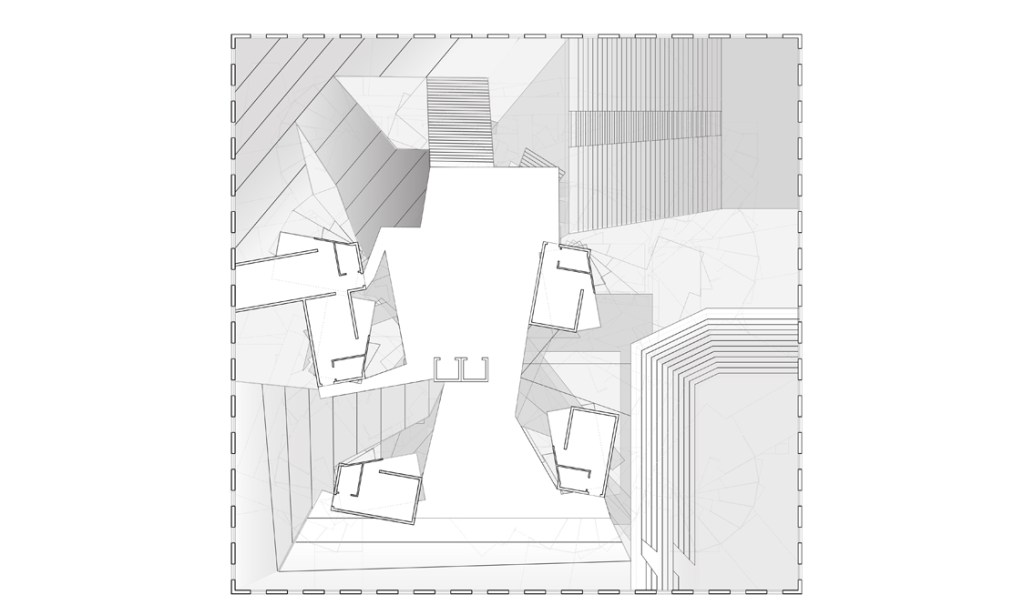
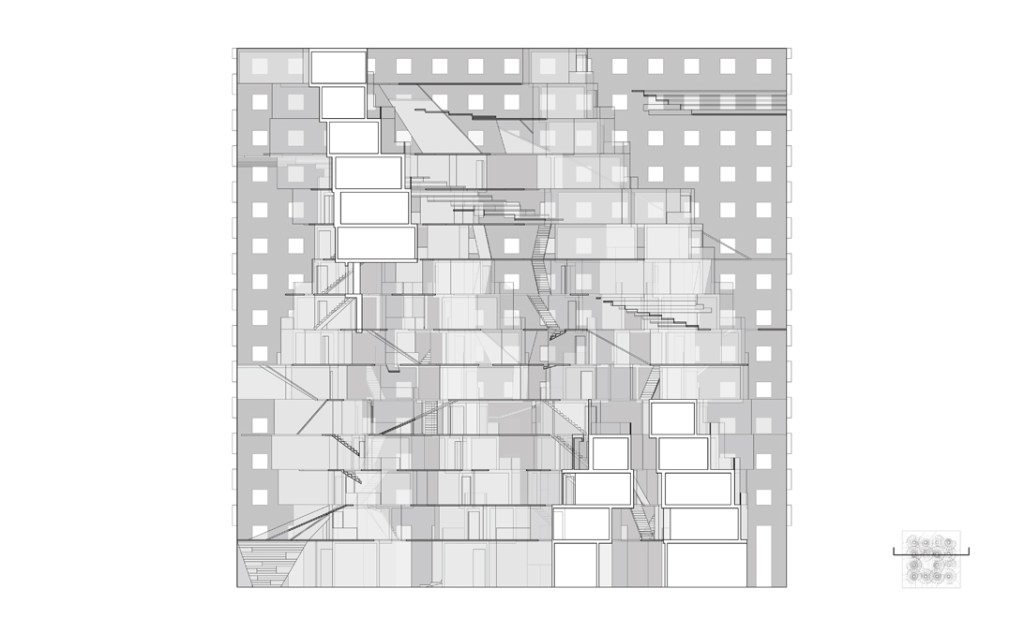
The Revolving city’s centralized infrastructure emerges from the existing structure of the Atlantic bridge allowing efficiencies within the system. Using rotation as an operation to create differentiation from the centralized system, large plates begin to revolve out from under the bridge structure. The city uses rotation as a strategy to grow from itself launching bridges which new towers grow to meet and immediately integrating them into the city. The city continues to grow down towards the canal, compressing itself thus even the most interior part of the city retains its views.
The plates of the towers take on various urban conditions becoming open communal areas both on the interior to bring the city together and on the exterior as terraces and circulation. The area that has the maximum accessibility generates a theatre type, while as market or central hub emerges where plates from different towers come together along a bridge. The large plates form smaller communities within the city and blend from one to another through the communal terraces.
As the towers grow, the plate has more private amenities attached to the unit with unblocked views of the surrounding region. Individual units extend upwards along an infrastructural bathroom core, rotating through the plates and puncturing them. The units have smaller more secluded terraces which create interior atriums through the large plates and smaller neighborhoods begin to form within the city through the gradient in levels of interiority. The communities provide a variety of living conditions from communal to more individual with a variation in views and terrace types. As the durations of nomads stay varies greatly, the need for a variety of spatial and living conditions is required to cater to the needs of each nomad population.
Visual connections throughout the city through various neighborhoods and interior spaces assists in encouraging interactions of the inhabitants to engage the nomads in the city regardless of the duration of their occupation. The landscape winds through the city it creates a redundant and communal circulation outside of the central infrastructure cores providing space for more interactions to occur as well as a choice for the nomads.
The Revolving City strives to provide a more welcoming urban setting for nomads, which investigates the interactions between public and private spaces through the use of visual connections between various privacy levels. The city centralizes infrastructure allowing the units and landscape to revolve around these centralized points creating a gradient of permeability. From the most secluded of the units to the most public of the landscape; nomads are provided the variation of a city while maintaining their lifestyle.
 Natalie Haydon-Hawkins